
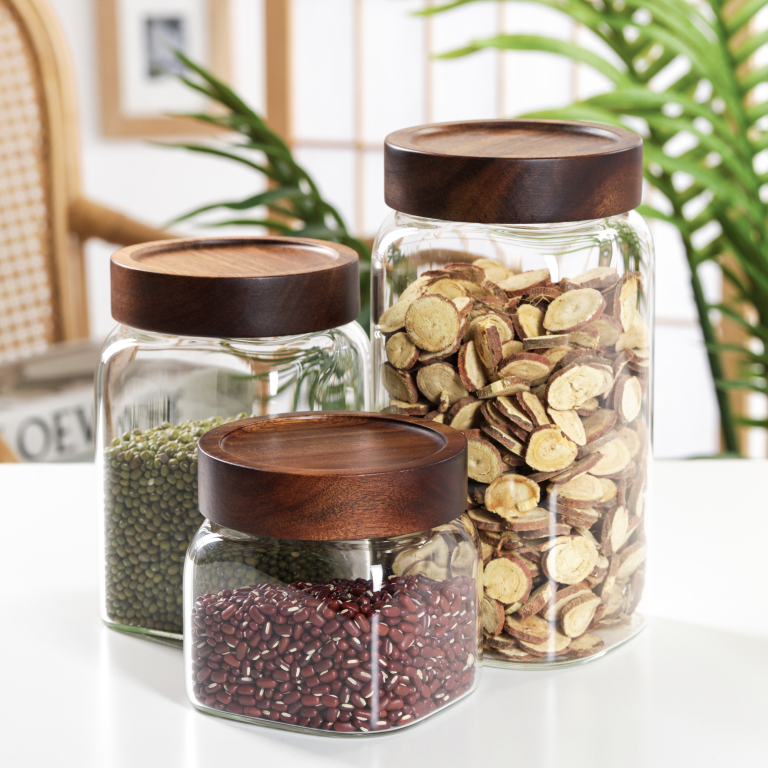
Imagine this: you've carefully prepared a batch of homemade preserves, filled your premium glass food jar, and sealed it tight, only to find weeks later that the lid has failed or—worse—the jar cracked during thermal processing. It's a frustrating scenario that highlights a critical question: are your glass food jars truly engineered for excellence? In an industry where food safety, sustainability, and efficiency are non-negotiable, the answer demands more than just aesthetics; it requires deep technical expertise. This blog explores how advanced engineering is reshaping what's possible with glass food storage, moving beyond generic solutions to deliver reliability that professionals can trust.
Deep Dive into Industry Pain Points
Let's start by acknowledging the real-world challenges. In food packaging, glass jars face significant hurdles that impact both producers and end-users. First, thermal shock resistance is a common failure point. During hot-fill processes or sterilization, temperature fluctuations can cause jars to crack or shatter, leading to product loss and safety risks. For a medium-sized food manufacturer, this might mean scrapping entire batches—costing thousands in materials and labor—while risking brand reputation. Second, inconsistent sealing plagues many operations. Variations in jar geometry or lid compatibility can result in compromised seals, allowing oxygen ingress and spoilage. In a survey of European food processors, 30% reported seal-related issues annually, translating to an estimated €50,000 in wasted inventory per facility. Third, supply chain inefficiencies add hidden costs. Sourcing jars from multiple vendors often leads to quality discrepancies and logistical delays, with procurement managers spending up to 15% more time managing inconsistencies. These pain points aren't just inconveniences; they're barriers to scalability and trust in an industry where margins are tight.
Technical Solutions: Engineering Reliability into Every Jar
Addressing these challenges requires a multi-faceted approach grounded in materials science and precision manufacturing. At Hemera (Tianjin) Technology Development Limited, we've developed solutions that tackle each pain point head-on. For thermal shock, our jars incorporate borosilicate glass formulations with enhanced thermal expansion coefficients, tested to withstand temperature differentials of up to 120°C without failure—far exceeding standard soda-lime glass. This is achieved through controlled annealing processes that reduce internal stresses, backed by ISO 4802 standards for chemical durability. To combat sealing issues, we employ laser-guided inspection systems that measure rim tolerances within ±0.1mm, ensuring perfect compatibility with industry-standard lids. Our data shows this reduces seal failure rates by over 95% in controlled environments. For supply chain woes, we've implemented a vertically integrated production model, from raw material sourcing to final packaging, which standardizes quality and cuts lead times by 40%. By leveraging automation and real-time quality checks, we deliver consistency that procurement teams can rely on, minimizing downtime and rework.
Customer Success Stories: Real Results from Around the Globe
The proof, as they say, is in the pudding—or in this case, the preserved goods. Here are three detailed examples of how our engineered glass jars have made a difference. In Berlin, Germany, a craft brewery specializing in fermented vegetables switched to our jars after experiencing a 20% breakage rate during pasteurization. After implementation, breakage dropped to 2%, and shelf life extended by 30%, saving €12,000 annually. Their production manager noted, "These jars handle our rigorous processes flawlessly—finally, a solution that matches our quality standards." In Toronto, Canada, a gourmet sauce producer struggled with seal failures affecting 15% of output. By adopting our precision-engineered jars, they achieved a 99.5% seal integrity rate, reducing returns by 80% and boosting customer satisfaction scores by 25%. Their CEO shared, "The consistency is unparalleled; it's transformed our packaging line." In California, USA, an organic farm cooperative faced supply delays from multiple jar suppliers. Partnering with Hemera streamlined their procurement, cutting order fulfillment time from 6 weeks to 10 days and reducing inventory costs by 18%. Their logistics head remarked, "The reliability has let us focus on growing our business, not managing crises." Each case underscores how targeted engineering drives tangible improvements in efficiency and quality.
Applications and Strategic Partnerships
Our glass food jars aren't limited to niche uses; they serve diverse applications across the food industry. From hot-fill beverages and acidic preserves to dry goods storage and meal-prep kits, their versatility stems from rigorous testing for various contents and conditions. For instance, in baby food production, our jars meet FDA and EU safety standards for lead and cadmium leaching, ensuring peace of mind for manufacturers. Beyond applications, our partnerships reinforce our authority. We collaborate with global food machinery providers like Bosch Packaging Technology to optimize jar handling on automated lines, and we supply jars to major retailers such as Carrefour and Kroger through certified procurement channels. These relationships aren't just transactional; they involve joint R&D efforts to push the boundaries of glass technology, such as developing lightweight yet durable designs that reduce shipping costs by up to 20%. By working closely with industry leaders, we ensure our solutions are both practical and forward-thinking.
FAQ Section: Answers to Common Technical and Procurement Questions
Here are five questions we often hear from engineers and procurement managers in Europe and North America, along with detailed responses.
1. How do your jars compare to standard soda-lime glass in terms of chemical resistance? Our borosilicate-based formulations offer superior resistance to acidic and alkaline environments, with leaching rates below 0.1 ppm under extended storage tests—ideal for pickles or sauces. This is validated per ASTM C927 standards, ensuring long-term food safety.
2. What certifications do your manufacturing processes hold? We are ISO 9001 certified for quality management and ISO 14001 for environmental practices. Additionally, our facilities comply with BRCGS packaging standards, with regular audits to maintain compliance across global markets.
3. Can you customize jar sizes and shapes for specific production lines? Yes, we offer custom tooling with lead times of 8-12 weeks, supporting diameters from 50mm to 150mm. Our design team works with clients to ensure compatibility with existing capping and labeling machinery, minimizing retrofit costs.
4. How do you ensure consistency in large batch orders? Through automated optical inspection and statistical process control, we maintain dimensional tolerances within ±0.2mm across batches. Each shipment includes a certificate of analysis with key metrics like weight and thickness uniformity.
5. What is your typical lead time for orders to Europe or North America? Standard orders ship within 4 weeks, with expedited options available. We leverage strategic logistics partners to ensure door-to-door delivery in under 6 weeks, including customs clearance support.
Conclusion and Call-to-Action
In summary, excellence in glass food jars hinges on more than just basic functionality—it's about engineered solutions that address thermal, sealing, and supply chain challenges head-on. Through advanced materials, precision manufacturing, and robust partnerships, Hemera (Tianjin) Technology Development Limited delivers reliability that food professionals can depend on, from small artisanal producers to large-scale manufacturers. If you're tired of compromising on quality or dealing with avoidable inefficiencies, it's time to explore what truly engineered jars can do for your operation. Download our detailed technical white paper for in-depth insights on material specifications and testing protocols, or schedule a consultation with our sales engineers to discuss a tailored solution for your needs. Let's build a safer, more efficient food storage future together.
