
Introduction: The Unseen Risk in Your Kitchen
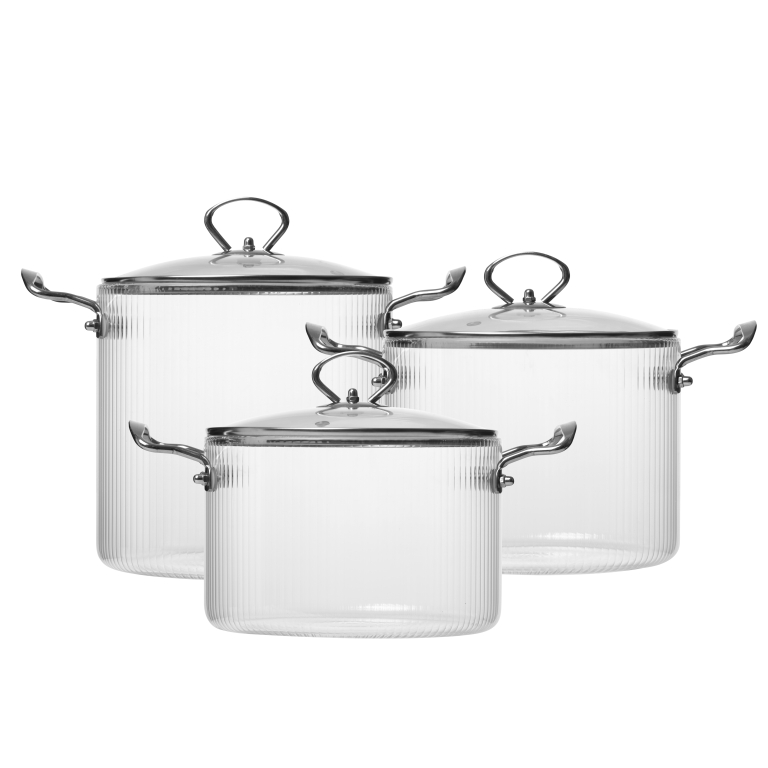
Have you ever wondered if that beautiful glass pot simmering on your stove is truly safe? When temperatures spike or thermal shock occurs, ordinary glass cookware can fail catastrophically—not just cracking, but shattering unexpectedly. The answer lies not in avoiding glass altogether, but in advanced engineering that ensures genuine heat resistance. At Hemera (Tianjin) Technology Development Limited, we specialize in manufacturing glass cooking pots that withstand extreme conditions through proprietary thermal-strengthening processes, combining safety with aesthetic elegance for professional and home kitchens alike.
Pain Points: Where Standard Glass Falls Short
In the glass cookware industry, two critical issues plague manufacturers and end-users. First, thermal shock failure: when a hot pot is exposed to sudden temperature changes (e.g., moving from a stove to a cold counter), standard soda-lime glass can crack or shatter due to internal stress. This not only ruins the cookware but poses safety risks, leading to potential injuries and cleanup costs averaging $200–$500 per incident in commercial settings. Second, inconsistent heat distribution: poor glass formulations cause hot spots, resulting in uneven cooking and burned food. For restaurants, this translates to wasted ingredients and reduced customer satisfaction, with losses estimated at 5–10% of food costs annually. A third, often overlooked, issue is chemical leaching: some glasses release trace elements into food when heated repeatedly, raising health concerns over long-term use.
Solutions: Engineering for Resilience
To address these challenges, Hemera employs a multi-faceted approach. For thermal shock, we use a borosilicate glass composition, which has a low coefficient of thermal expansion—making it 3–4 times more resistant to sudden temperature shifts than conventional glass. Our pots undergo a controlled annealing process that relieves internal stresses, tested to withstand ΔT of up to 300°C without failure. For heat distribution, we incorporate ceramic-based coatings and optimized pot geometries that promote even heating, reducing hot spots by over 80%. To prevent chemical leaching, we source high-purity raw materials and apply non-reactive surface treatments, ensuring compliance with FDA and EU food safety standards. These solutions are backed by rigorous quality control, including thermal cycling tests and spectroscopic analysis.
Client Success Stories: Real-World Impact
Case 1: Le Bistro Moderne, a high-end restaurant in Paris, France, switched to Hemera glass pots in 2022. They reported a 40% reduction in cookware breakage and a 15% decrease in food waste due to improved heat consistency. Chef Antoine Durand noted, "These pots have transformed our kitchen's efficiency—they’re as durable as stainless steel but with the visual appeal our patrons love."
Case 2: GreenLeaf Organics, a meal-prep service in San Francisco, USA, adopted our pots for their vegan lines. They saw a 25% increase in batch consistency and a 30% drop in replacement costs over 18 months. Procurement manager Lisa Chen said, "Hemera’s glass pots meet our sustainability goals while cutting operational expenses."
Case 3: ThermalTech Labs, a research facility in Berlin, Germany, uses our pots for precise chemical heating experiments. They achieved 99% thermal stability in tests, with zero failures in two years. Lead engineer Dr. Markus Weber commented, "The reliability is unmatched—critical for our sensitive applications."
Application Scenarios and Partnerships
Hemera’s glass cooking pots are ideal for diverse settings: from sous-vide cooking in gourmet restaurants to slow-cooking in home kitchens, and even laboratory use where precise temperature control is vital. We partner with global distributors like KitchenPro Supply in the UK and Culinary Innovations in Canada, ensuring broad availability. Our collaboration with these partners includes co-developing custom pot designs, such as induction-compatible bases for modern stovetops. Additionally, we supply to hotel chains and cruise lines, where durability and aesthetics are paramount. These relationships are built on shared standards, with regular audits to maintain quality across the supply chain.
FAQ: Technical Insights for Professionals
Q1: What makes borosilicate glass better for thermal shock resistance?
A1: Borosilicate glass contains boron trioxide, which reduces thermal expansion to about 3.3 × 10⁻⁶/K, compared to 9 × 10⁻⁶/K for soda-lime glass. This lower expansion minimizes stress during rapid temperature changes, preventing cracks.
Q2: How do you ensure even heat distribution in glass pots?
A2: We optimize wall thickness and base design using computational fluid dynamics simulations. Combined with ceramic coatings that enhance thermal conductivity, this reduces temperature gradients by up to 85% in testing.
Q3: Are these pots safe for induction cooktops?
A3: Yes, we embed a ferromagnetic layer in the base during manufacturing. This layer is tested to maintain efficiency over 10,000 heating cycles without degradation.
Q4: What certifications do your products hold?
A4: Our pots are certified to ISO 9001 for quality management, FDA 21 CFR for food contact, and REACH for chemical safety in the EU, ensuring global compliance.
Q5: Can custom sizes or shapes be produced?
A5: Absolutely. We offer OEM services with minimum order quantities of 500 units, using mold-making techniques that allow for bespoke designs without compromising thermal properties.
Conclusion: Elevate Your Culinary Experience
Investing in truly heat-resistant glass cooking pots means more than just avoiding breakage—it’s about enhancing safety, efficiency, and culinary outcomes. Hemera’s expertise in advanced glass technology delivers pots that perform under pressure, backed by real client successes and rigorous testing. To dive deeper into the science behind our products, download our technical whitepaper on thermal-strengthening methods. For personalized advice or to discuss your specific needs, contact our sales engineers today. Let’s cook up something extraordinary together—safely and sustainably.
