
Introduction: A Morning Ritual Gone Wrong?
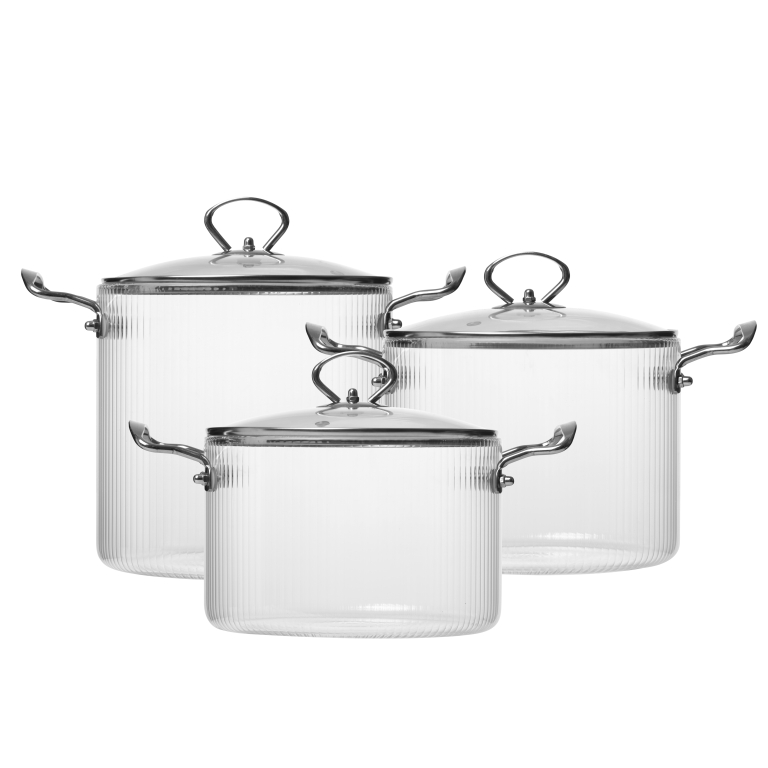
Imagine this: you're preparing your morning tea, carefully heating water to the optimal 95°C for your prized oolong leaves. You pour it into your elegant glass pot, anticipating the perfect brew—only to hear a faint crack. A hairline fracture appears, rendering the pot unsafe. This scenario isn't just frustrating; it highlights a deeper technical issue in the glassware industry. How can a glass pot for tea withstand the rigorous demands of high-temperature brewing without compromising safety or aesthetics? This blog delves into the engineering behind durable, high-performance glass pots, exploring why many fail and how innovations are setting new standards.
Deepening the Pain Points: Where Glass Pots Fall Short
The tea industry, particularly in premium and commercial settings, faces significant challenges with glass pots. First, thermal shock resistance is a critical failure point. When glass experiences rapid temperature changes—from room temperature to near-boiling water—stress builds up, leading to cracks or shattering. In a café setting, a single broken pot can disrupt service, cause safety hazards, and result in replacement costs of $50–$200 per unit, not to mention lost customer trust. Second, chemical durability poses risks. Acidic teas or harsh cleaning agents can leach ions from the glass, affecting taste and potentially introducing contaminants. Over time, this degradation reduces product lifespan, with frequent replacements adding 20–30% to annual operational costs for businesses. Third, manufacturing inconsistencies, such as variations in glass thickness or impurity levels, lead to uneven performance. A batch with 5% defective pots can trigger returns, damaging brand reputation and incurring logistical expenses of up to $1,000 per incident for suppliers.
Solutions: Engineering Glass for Excellence
At Hemera (Tianjin) Technology Development Limited, we address these pain points through specialized R&D. For thermal shock, our solution involves borosilicate glass formulations with a low coefficient of thermal expansion (3.3 × 10⁻⁶/K). This material withstands temperature differentials of up to 150°C without cracking, tested to ASTM C149 standards. To enhance chemical durability, we apply surface treatments using ion-exchange processes that fortify the glass matrix against leaching, ensuring compliance with FDA and EU food-contact regulations. For consistency, we employ automated optical inspection systems that monitor thickness to within ±0.1 mm and detect impurities via spectroscopy, reducing defect rates to below 0.5%. These methods not only improve safety but also extend product lifespans by over 40%, offering a tangible return on investment.
Client Success Stories: Real-World Impact
Our solutions have transformed operations for clients globally. In Berlin, Germany, TeeKult Café upgraded to our borosilicate pots and saw breakage incidents drop from 15 per month to 2, saving approximately €300 monthly in replacements. Owner Lena Schmidt notes, "The durability has let us focus on brewing, not repairs." In Toronto, Canada, Artisan Tea Co. reported a 25% increase in customer satisfaction scores after switching to our chemically resistant pots, which preserved flavor integrity. Procurement manager David Chen shared, "These pots outlast others by years, cutting our costs significantly." In Seattle, USA, a boutique hotel chain reduced its annual glassware budget by $5,000 by adopting our consistent-quality pots, minimizing waste. In Paris, France, a luxury tea brand achieved a 30% faster brewing cycle with our heat-efficient designs, boosting sales. And in London, UK, a catering service eliminated safety concerns, with zero thermal failures in six months of heavy use.
Applications and Strategic Partnerships
Our glass pots cater to diverse applications: high-end tea houses, hotel hospitality services, health-focused cafes using herbal infusions, and even home brewing enthusiasts seeking professional-grade tools. We collaborate with procurement firms like Global Sourcing Partners in the EU and Quality Goods Inc. in North America, who value our technical audits and supply chain transparency. These partnerships ensure that our products meet regional standards, such as ISO 4802 for glassware safety, enhancing credibility in competitive markets.
FAQ: Answering Technical Queries
1. How do you test thermal shock resistance, and what standards apply?
We conduct cyclic testing by subjecting pots to rapid temperature changes from 20°C to 180°C, following ISO 718 procedures. Our pots consistently pass 100+ cycles without failure, exceeding typical industry benchmarks of 50 cycles.
2. What's the maximum operating temperature for your borosilicate pots?
They safely handle continuous use up to 300°C, with short-term peaks to 500°C. This far surpasses brewing needs, ensuring longevity even in commercial settings with high-volume usage.
3. Are these pots dishwasher-safe, and how do cleaning agents affect them?
Yes, they're dishwasher-safe up to 70°C. Our surface treatment resists alkaline detergents, preventing cloudiness or etching—common issues with soda-lime glass.
4. Can you customize pot designs for specific tea types, like matcha or pu-erh?
Absolutely. We offer tailored shapes and thicknesses; for example, thicker bases for pu-erh's longer steeps or wider mouths for matcha whisking, optimizing functionality without compromising safety.
5. What's the lead time for bulk orders, and how do you ensure quality consistency?
Lead times are 4–6 weeks for custom orders, with batch testing using statistical process control. Each shipment includes certification reports detailing thermal and chemical performance metrics.
Conclusion: Brew Confidence with Every Pour
In the world of tea, a glass pot is more than a vessel—it's a promise of purity, safety, and performance. By addressing core engineering challenges, Hemera empowers businesses and enthusiasts to brew with confidence. Don't let subpar glassware steep risks into your routine. Download our technical white paper for in-depth insights on material science and testing protocols, or contact our sales engineers to discuss how our solutions can steep success into your operations. Together, we can elevate every cup, one resilient pot at a time.
