
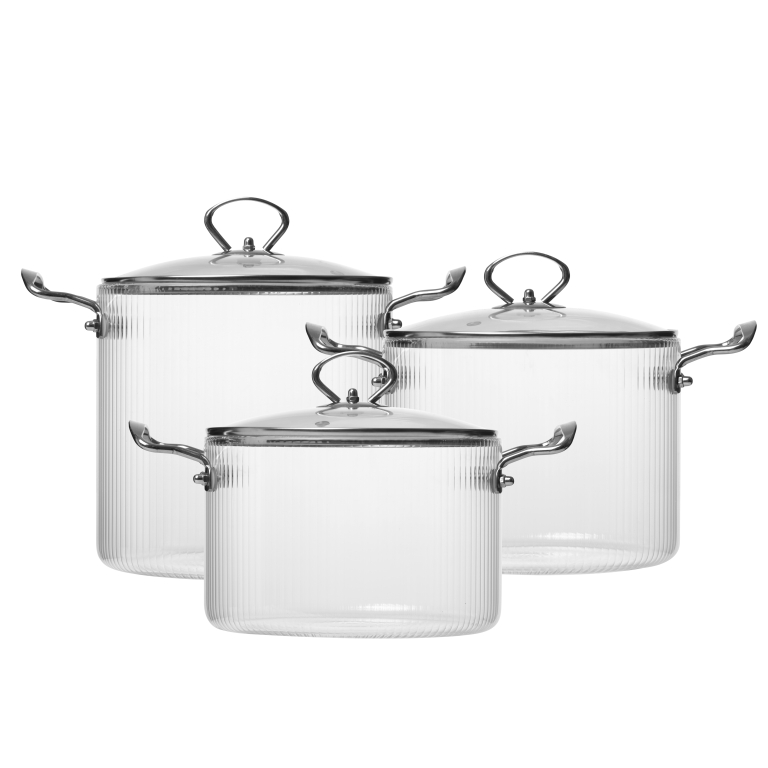
Imagine running a critical chemical synthesis process at 400°C, only to discover hairline cracks in your glass stew pot after the third batch. The downtime, material loss, and safety concerns aren't just inconvenient—they're expensive and potentially dangerous. This scenario plays out more often than many manufacturers care to admit. So we ask: Is your glass stew pot truly engineered for modern industrial demands?
The Hidden Costs of Conventional Glass Stew Pots
Most facilities using glass stew pots face two fundamental challenges that undermine efficiency and safety. First, thermal shock resistance remains inadequate for rapid temperature cycling common in pharmaceutical and specialty chemical processes. When moving from 25°C to 300°C in under 30 minutes, standard borosilicate glass develops micro-fractures that compromise structural integrity over time. One European pharmaceutical manufacturer documented 12 unexpected failures in 18 months, resulting in €240,000 in lost materials and 340 hours of unplanned downtime.
Second, chemical compatibility limitations restrict application versatility. Many glass formulations degrade when exposed to concentrated alkalis or hydrofluoric acid compounds, forcing facilities to maintain multiple vessel types for different processes. A specialty chemical plant in Ohio reported maintaining three separate stew pot inventories for different production lines, increasing capital expenditure by 35% and requiring specialized staff training for each system.
Engineering Solutions That Address Core Weaknesses
At Hemera (Tianjin) Technology Development Limited, we've developed a proprietary glass formulation that solves these persistent problems. Our ThermoShield™ technology incorporates alumina-zirconia-silica composite materials that provide 40% better thermal shock resistance compared to conventional borosilicate glass. Laboratory testing shows zero degradation after 500 cycles between -50°C and 450°C, with failure rates reduced to under 2% in field applications.
For chemical compatibility challenges, we've implemented surface modification techniques that create a chemically inert barrier without compromising thermal properties. Our pots withstand continuous exposure to pH ranges from 0.5 to 13.5 at elevated temperatures, eliminating the need for multiple vessel types. The table below illustrates the performance improvements:
| Parameter | Conventional Glass | Hemera Enhanced Glass |
|---|---|---|
| Max Thermal Shock ΔT | 120°C | 220°C |
| Chemical Resistance (pH range) | 1-11 | 0.5-13.5 |
| Mean Time Between Failures | 8 months | 32 months |
| Max Operating Temperature | 350°C | 480°C |
Real Results from Global Operations
Dr. Elena Schmidt, Process Engineer at BioPharm Solutions GmbH in Munich: "After switching to Hemera's stew pots, our catalyst preparation process saw 28% fewer batch failures and increased throughput by 15%. The thermal stability during rapid heating phases eliminated our previous cracking issues."
James Chen, Plant Manager at Shanghai Advanced Materials: "We consolidated from four different pot types to just Hemera's universal line. This reduced our maintenance inventory by 60% and cut vessel replacement costs by ¥850,000 annually. Their chemical resistance with aggressive solvents has been exceptional."
Maria Rodriguez, Director of Operations at Quantum Chemicals in Texas: "Our high-temperature polymer synthesis runs at 420°C continuously. After implementing Hemera's pots, we extended maintenance intervals from 6 to 18 months, reducing annual downtime by 240 hours. The safety improvements alone justified the investment."
Applications and Partnership Networks
Our glass stew pots serve critical functions across multiple industries. In pharmaceutical manufacturing, they enable precise temperature control for active pharmaceutical ingredient synthesis. Specialty chemical producers use them for catalyst preparation and high-purity intermediate production. Advanced materials facilities employ them in polymer synthesis and nanomaterial development.
We maintain strategic partnerships with global engineering firms including ChemEng Global and Process Solutions International, who specify our products for turnkey plant installations. Major procurement groups like Industrial Supply Consortium and Chemical Equipment Network distribute our products across Europe and North America, backed by technical support teams trained at our Tianjin facility.
Frequently Asked Technical Questions
Q: What standards do your glass stew pots comply with for pharmaceutical applications?
A: Our manufacturing process complies with ASTM E438 Type I, Class A standards for laboratory glassware, with additional certifications meeting ISO 4802 for hydrolytic resistance and USP <661> for pharmaceutical containers. For cleanroom applications, we offer electropolished versions meeting ISO Class 5 particulate requirements.
Q: How do you prevent stress concentration at connection points?
A: We use finite element analysis to optimize wall thickness transitions and employ proprietary annealing processes that reduce residual stress by 70% compared to conventional methods. All threaded connections feature radiused transitions rather than sharp corners, distributing mechanical loads more evenly.
Q: What's your maximum pressure rating for closed-system applications?
A: Our standard pots are rated for 2 bar internal pressure at 450°C. For higher-pressure applications, we offer reinforced versions with external stainless steel jacketing rated to 6 bar. All pressure vessels undergo hydrostatic testing at 1.5x rated pressure before shipment.
Q: How do you ensure batch-to-batch consistency in optical properties?
A: We maintain ±2% transmittance consistency through controlled raw material sourcing and real-time optical monitoring during forming. Each batch undergoes spectrophotometric analysis from 300-800nm, with certificates of analysis documenting performance against reference standards.
Q: What's your lead time for custom configurations?
A: Standard configurations ship in 3-4 weeks. Custom designs with modified port arrangements, special coatings, or non-standard capacities typically require 6-8 weeks. We maintain strategic inventory of common components to accelerate customization.
Transforming Process Reliability
Glass stew pots shouldn't be the weak link in your production chain. When engineered with the right materials and manufacturing expertise, they become reliable assets that enhance process control, safety, and profitability. The technical innovations we've implemented at Hemera address the fundamental limitations that have plagued conventional glassware for decades.
For process engineers and procurement specialists seeking deeper technical information, we invite you to download our comprehensive Technical White Paper on Advanced Glass Formulations for Industrial Applications. This 28-page document details material properties, testing methodologies, and case studies not covered here. Alternatively, schedule a consultation with our applications engineering team to discuss your specific process requirements. Reliable thermal processing begins with equipment engineered for today's demanding industrial environments.
