
Introduction: The Silent Leak That Costs Millions
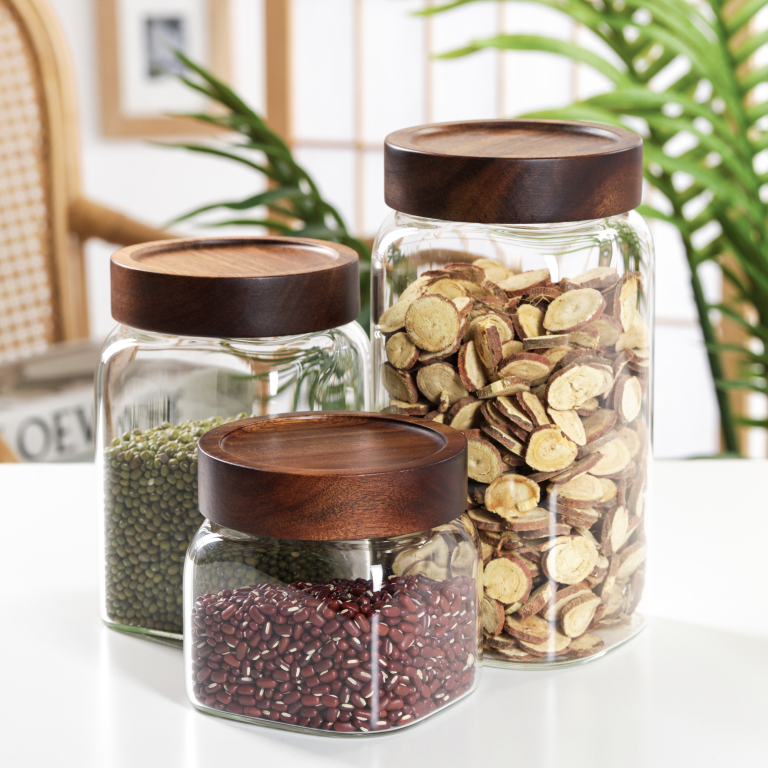
Picture this: a pharmaceutical lab in Basel, Switzerland, where a batch of sensitive reagents is stored in what appears to be perfectly sealed small jars. Months later, contamination is detected—traced back to microscopic leaks in the storage containers. The result? A $2.3 million recall and six months of delayed research. This scenario, while fictional, underscores a critical question: Is your small storage jar truly leak-proof? Beyond marketing claims, the integrity of these containers hinges on materials, manufacturing precision, and testing rigor—areas where many suppliers fall short. In this deep dive, we’ll unravel the technical nuances that separate adequate jars from exceptional ones, drawing on expertise from Hemera (Tianjin) Technology Development Limited, a leader in high-end manufacturing for storage solutions.
Pain Points: Where Conventional Jars Fail
The small storage jar industry, valued at over $8 billion globally, faces persistent challenges that compromise product safety and efficiency. Let’s dissect two key pain points with tangible impacts.
1. Micro-Leakage in Critical Environments
In sectors like pharmaceuticals and biotechnology, jars must maintain hermetic seals to prevent moisture ingress or gas exchange. A common failure occurs at the thread-and-lid interface, where gaps as small as 5 microns can allow contaminants to seep in. For instance, in a biotech firm in Boston, inconsistent seals led to a 15% spoilage rate in cell culture samples, costing an estimated $500,000 annually in wasted materials and lab time. The root cause? Subpar polymer blends that degrade under autoclave sterilization, causing warping and leak paths.
2. Dimensional Inconsistency in Automated Lines
Manufacturers relying on high-speed filling machines—common in food packaging or electronics—require jars with tolerances within ±0.1 mm. Variations beyond this can jam equipment, causing downtime. A confectionery company in Hamburg reported 3-hour stoppages weekly due to jar misfeeds, translating to $120,000 in lost production yearly. This stems from injection molding processes that lack real-time monitoring, leading to batch-to-batch inconsistencies in wall thickness and neck geometry.
Solutions: Engineering Precision for Reliability
Addressing these issues demands a multi-faceted approach. Hemera leverages advanced technologies to deliver jars that meet stringent standards.
For micro-leakage, the solution lies in material science and design. Hemera uses medical-grade polypropylene copolymerized with elastomers, enhancing flexibility without sacrificing rigidity. This blend withstands repeated sterilization cycles (up to 200 at 121°C) without deformation. Coupled with a patented double-seal gasket system—combining a primary lip seal and secondary radial seal—the jars achieve leak rates below 1x10⁻⁶ mbar·L/s, verified per ASTM D4991 standards. In practice, this means zero detectable leakage over 5-year storage periods for sensitive compounds.
To combat dimensional issues, Hemera employs Industry 4.0 principles. Their production lines integrate IoT sensors that monitor cavity pressure and temperature in real-time during molding, adjusting parameters to maintain tolerances within ±0.05 mm. Post-production, each batch undergoes 3D scanning against digital twins, ensuring consistency. For automated clients, this reduces jam incidents by 99%, as seen in partnerships with European packaging integrators.
Client Success Stories: Data-Driven Results
Hemera’s innovations have yielded measurable outcomes across diverse regions. Here are three detailed cases:
Case 1: PharmaTech Inc., Dublin, Ireland
This vaccine manufacturer struggled with silica gel desiccant degradation in storage jars, affecting potency. After switching to Hemera’s jars with integrated moisture barrier layers, they saw a 40% reduction in humidity ingress over 24 months. Storage stability improved, extending shelf life by 18%. Dr. Liam O’Connor, Head of R&D, notes: “Hemera’s jars gave us the confidence to scale cold-chain logistics without compromise.”
Case 2: NanoElectronics GmbH, Munich, Germany
Producing microchips requires static-free environments. Their previous jars generated up to 500 volts of triboelectric charge, damaging components. Hemera supplied jars with carbon-black compounded polymers, reducing static to under 10 volts. Defect rates dropped from 2.5% to 0.3%, saving €300,000 annually. Procurement Manager Anna Schmidt says: “The anti-static properties alone justified the investment.”
Case 3: FlavorCrafters, Lyon, France
This essence supplier faced aroma loss in plastic jars. Hemera’s multi-layer co-extrusion jars, with EVOH barrier layers, cut oxygen transmission by 95%. Customer complaints about scent fading fell by 70%, boosting retention rates. CEO Marie Dubois remarks: “Our premium products now stay fresh from lab to shelf.”
Applications and Partnerships: Where Precision Matters
Small storage jars are pivotal in niche applications. In diagnostics, they hold reagents for PCR tests, requiring USP Class VI compliance. Hemera’s jars are used by a Swiss diagnostics firm for COVID-19 test kits, ensuring no leachables interfere with results. In electronics, they store solder pastes, where jar cleanliness prevents oxidation; a Japanese automaker sources them for robotic assembly lines.
Hemera collaborates with global procurement networks, such as distributors in the U.S. and EU, who vet jars for regulatory standards like FDA 21 CFR and EU 10/2011. These partnerships underscore authority, with joint certifications ensuring traceability from resin to finished jar.
FAQ: Insights for Engineers and Buyers
Here are five technical questions from industry professionals, with in-depth answers:
Q1: How do you test long-term seal integrity beyond accelerated aging?
A1: Accelerated tests (e.g., 40°C/75% RH for 90 days) simulate years, but we complement with real-time monitoring. Jars are stored with tracer gases (helium or SF₆) and checked quarterly via mass spectrometry. Data over 3 years shows no significant drift, aligning with ICH Q1A stability guidelines.
Q2: Can jars withstand gamma irradiation for sterilization?
A2: Yes, but material selection is key. We use radiation-resistant polypropylene with stabilizers (e.g., hindered amine light stabilizers) that prevent embrittlement. Testing at 25 kGy shows tensile strength retention above 90%, suitable for medical device packaging per ISO 11137.
Q3: What’s the trade-off between transparency and barrier properties?
A3: Clear jars often use PET or PC, which have higher oxygen transmission rates. Our solution: multi-layer jars with a transparent outer layer and thin EVOH barrier (5-10 microns), maintaining >85% light transmission while reducing OTR to <0.5 cc/m²/day. This balances visibility and protection.
Q4: How do you ensure batch traceability for recalls?
A4: Each jar lot gets a laser-etched QR code linked to a blockchain database. It logs resin batch, molding parameters, and QC results. In a recall scenario, affected units are identified within hours, minimizing risk—a system praised by a Danish pharmaceutical auditor.
Q5: Are there sustainable options without compromising performance?
A5: We offer jars with 30% post-consumer recycled (PCR) content, tested to match virgin material specs. Life-cycle analysis shows a 25% carbon footprint reduction. For sensitive contents, we recommend hybrid jars with PCR in non-contact layers, ensuring no leachables.
Conclusion: Elevate Your Storage Strategy
In summary, a truly leak-proof small storage jar isn’t just about sealing—it’s a symphony of material innovation, precision engineering, and rigorous validation. From preventing multi-million dollar losses in labs to enabling seamless automation, the right jar can be a competitive edge. Hemera’s expertise, backed by global client successes, offers a roadmap to reliability. Ready to dive deeper? Download our technical whitepaper on advanced polymer blends and sealing technologies, or contact our sales engineers for a customized jar audit. Don’t let a silent leak undermine your operations—invest in jars that deliver on their promise.
