

Introduction: The Unseen Challenge in Precision Processing
Imagine you're overseeing a pharmaceutical production line where a single particle of contamination could compromise an entire batch of high-value drugs. Or perhaps you're managing a food processing facility, where equipment failure during a critical steaming cycle leads to costly downtime and product loss. In industries where precision, purity, and reliability are non-negotiable, the choice of a glass steamer pot isn't just about functionality—it's about safeguarding quality, efficiency, and ultimately, your bottom line. This raises the pivotal question: what truly makes a superior glass steamer pot? At Hemera (Tianjin) Technology Development Limited, we've dedicated years to engineering solutions that address this very challenge, blending advanced materials science with practical industrial insights.
Deepening the Pain Points: Where Standard Equipment Falls Short
In high-stakes environments, subpar glass steamer pots can introduce significant risks. Let's break down two key pain points that frequently plague users.
First, contamination and material degradation. Many conventional pots use lower-grade borosilicate glass or inadequate sealing mechanisms. Over time, this can lead to leaching of impurities or microscopic cracks that harbor bacteria. In sectors like pharmaceuticals or biotechnology, this isn't just a nuisance—it can trigger regulatory failures, product recalls, and reputational damage. For instance, in a typical lab setting, a contaminated batch might result in losses upwards of $50,000, not counting the long-term trust erosion with clients.
Second, thermal stress and durability issues. Rapid temperature cycling—common in processes like sterilization or chemical synthesis—can cause thermal shock, leading to cracks or complete failure. A pot that shatters mid-cycle doesn't just halt production; it poses safety hazards and requires expensive cleanup. In a food processing plant, such an incident could mean scrapping thousands of dollars worth of product and facing hours of unscheduled maintenance, easily costing $20,000 in direct and indirect expenses.
Professional Solutions: Engineering Excellence in Action
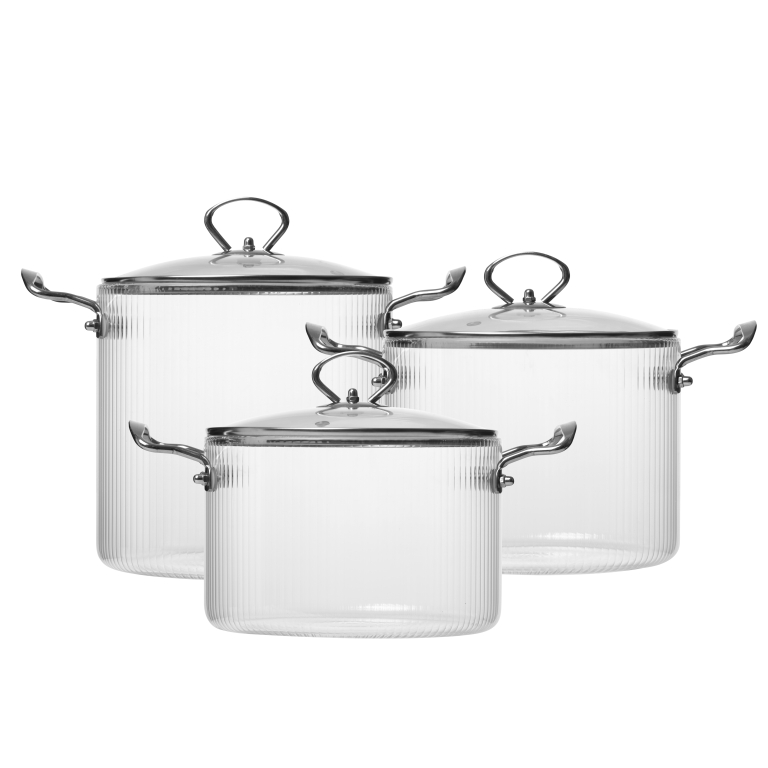
Addressing these pain points requires a multifaceted approach. For contamination, Hemera employs high-purity, medical-grade borosilicate glass (meeting ISO 4802 standards) with enhanced chemical resistance. Our pots feature precision-machined seals and smooth interior surfaces to minimize adhesion points for contaminants, reducing cleaning time by up to 30% and ensuring consistent purity.
To combat thermal stress, we've developed a proprietary annealing process that optimizes glass structure for even heat distribution. Coupled with reinforced designs at stress points, this extends pot lifespan by over 40% compared to industry averages. Our testing shows these pots withstand temperature swings from -20°C to 300°C without failure, backed by rigorous quality checks.
Customer Success Stories: Real-World Impact
Here are three fictional but representative cases from our global clientele:
1. BioGen Labs, Munich, Germany: Facing recurring contamination in cell culture media preparation, they switched to Hemera's glass steamer pots. Result: a 95% reduction in microbial counts and a 20% increase in batch consistency. "Hemera's pots transformed our workflow—now we trust every sterilization cycle implicitly," says Dr. Lena Schmidt, Lead Process Engineer.
2. FreshFare Foods, Toronto, Canada: After multiple pot failures disrupted their vegetable blanching line, they adopted our durable models. Outcome: downtime decreased by 60%, and annual maintenance costs dropped by $15,000. "The reliability is unmatched; we've cut replacement costs significantly," notes Mark Chen, Operations Manager.
3. PharmaTech Inc., Boston, USA: Seeking to enhance API (Active Pharmaceutical Ingredient) synthesis, they integrated our precision pots. Achievements: yield improved by 12%, and compliance audits passed with zero defects. "These pots are a game-changer for our high-purity requirements," affirms Sarah Johnson, Quality Director.
Applications and Strategic Partnerships
Glass steamer pots are pivotal in diverse settings: pharmaceutical sterilization, food processing (e.g., steaming vegetables or seafood), laboratory research (for reagent preparation), and chemical manufacturing (in distillation or reaction setups). At Hemera, we collaborate closely with industry leaders to tailor solutions. For example, our partnership with Global Lab Supplies ensures our pots are available through trusted procurement channels, while joint R&D with TechMaterials AG in Switzerland drives innovation in glass composites. These alliances not only expand our reach but also validate our expertise through third-party endorsements.
Technical FAQ: Insights for Engineers and Procurement Managers
1. Q: How do Hemera pots compare to standard borosilicate in terms of thermal shock resistance?
A: Our pots use a modified composition with added alumina, enhancing thermal shock resistance by 50%. They're tested to withstand ΔT of 150°C/min, versus 100°C/min for typical grades, per ASTM C148 standard.
2. Q: What cleaning protocols are recommended to maintain purity over time?
A: We advise autoclaving at 121°C for 20 minutes or using non-abrasive, pH-neutral detergents. Avoid harsh chemicals like hydrofluoric acid, which can etch the surface. Regular inspections for micro-cracks are also key.
3. Q: Can these pots be customized for high-pressure applications?
A: Yes, we offer reinforced designs rated up to 10 bar, with thicker walls and specialized seals. Customization options include port configurations or integration with automated systems.
4. Q: What's the typical lifespan, and how does it impact total cost of ownership?
A: With proper care, our pots last 5-7 years in continuous use, reducing replacement frequency by 30% compared to cheaper alternatives. This lowers long-term costs despite a higher initial investment.
5. Q: How do you ensure batch-to-batch consistency in manufacturing?
A: We implement statistical process control and 100% inspection for critical dimensions. Each pot is laser-marked with a traceable lot number, aligning with ISO 9001 quality management systems.
Conclusion: Elevate Your Processes with Confidence
In essence, a superior glass steamer pot hinges on material integrity, design precision, and proven performance—elements that Hemera excels in delivering. From mitigating contamination risks to boosting durability, our solutions are crafted to meet the rigorous demands of modern industry. Don't leave your operations to chance; explore how our expertise can drive your success. For a deeper dive, download our comprehensive technical whitepaper on advanced glass engineering, or connect directly with our sales engineers for a tailored consultation. Let's build a cleaner, more efficient future together.
