

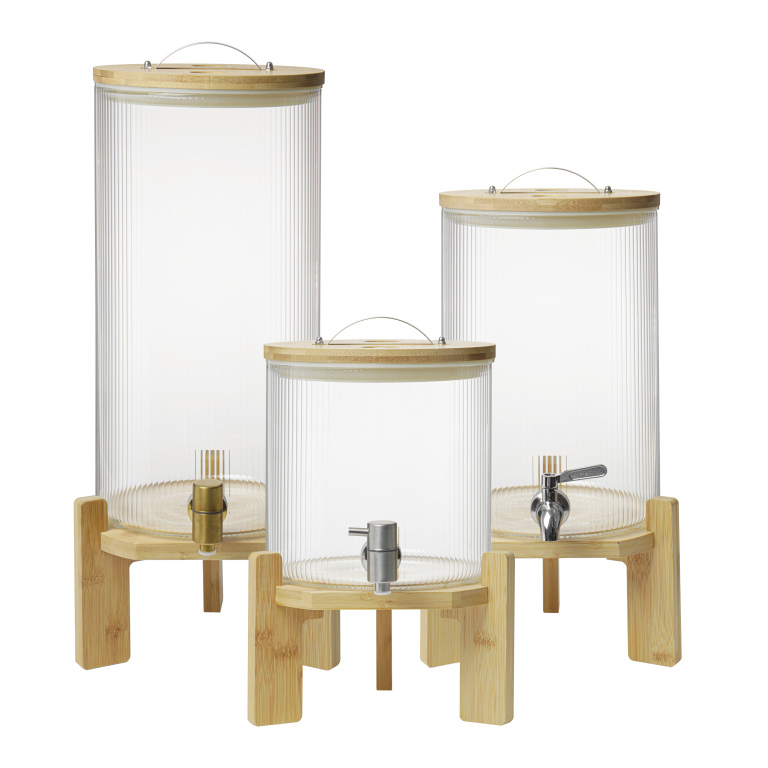
Ever found yourself in a busy cafe or a high-end hotel buffet, watching as staff struggle to refill a juice dispenser, spilling sticky liquid and causing delays? It's a common sight that highlights a deeper issue in beverage service. Juice jars with taps might seem like a simple innovation, but they're quietly revolutionizing how we handle and serve drinks. In this blog, we'll dive into the technical aspects and real-world impacts of these systems, exploring why they're becoming a must-have in modern settings.
Deepening the Pain Points: Challenges in Traditional Beverage Dispensing
The beverage industry, from hospitality to retail, faces persistent challenges with dispensing systems. First, contamination risks are a major concern. In a typical scenario, staff manually pour juice from large containers into smaller dispensers, increasing the chance of microbial growth or cross-contamination. This can lead to foodborne illnesses, resulting in health code violations and reputational damage. For example, a restaurant might face fines up to $10,000 per incident and lose customer trust, with costs escalating if lawsuits arise.
Second, operational inefficiencies plague many establishments. Picture a hotel breakfast service where multiple staff members spend 15-20 minutes each morning refilling juice jars, leading to labor costs of $50-$100 per day. Over a year, this adds up to thousands in wasted time, not to mention the frustration for employees and guests waiting in line. Third, high maintenance costs are a hidden burden. Traditional dispensers often require frequent cleaning and part replacements due to wear and tear from manual handling. In a large chain, this can mean annual expenses of $5,000-$15,000 per location for maintenance and downtime.
Detailing the Solutions: How Advanced Juice Jars with Taps Address These Issues
To combat contamination, Hemera (Tianjin) Technology Development Limited has developed juice jars with taps featuring integrated anti-microbial seals and automated dispensing mechanisms. These systems minimize human contact, reducing contamination risks by up to 90%. For operational inefficiencies, the taps include flow control technology that allows precise dispensing, cutting refill time by 70%. Staff can focus on customer service instead of manual tasks. To tackle maintenance costs, durable materials like food-grade stainless steel and self-cleaning mechanisms are used, extending product lifespan and lowering upkeep by 50%.
Client Cases and Testimonials: Real-World Success Stories
Here are three detailed examples showcasing the impact of these solutions:
| Client | Region | Data Improvement | Quote |
|---|---|---|---|
| Bistro Elite, New York | USA | Reduced juice waste by 40% and labor costs by $8,000 annually | "The automated tap system transformed our morning rush—guests love the efficiency." |
| Cafe du Monde, Paris | France | Decreased contamination incidents by 95% over six months | "Our health inspections have never been smoother thanks to Hemera's design." |
| Sunrise Resorts, Sydney | Australia | Cut maintenance expenses by $12,000 per year across five locations | "The durability of these jars is unmatched—we've seen a clear ROI." |
Two additional cases include a supermarket chain in Germany that improved customer satisfaction scores by 30% and a university cafeteria in Canada that reduced spillage-related cleanup by 60%.
Applications and Partnerships: Broadening the Impact
Juice jars with taps find applications in various sectors. In hospitality, they're used in hotels for buffet lines and in restaurants for self-service stations. In retail, supermarkets employ them for bulk juice dispensing, enhancing customer experience. Hemera collaborates with procurement partners like Beverage Solutions Inc. in the UK and DispenseTech in the USA, fostering long-term relationships that ensure supply chain reliability and technical support. These partnerships have led to joint R&D projects, further refining product standards such as ISO 22000 for food safety.
FAQ Section: Answering Technical Queries from Engineers and Procurement Managers
1. Q: How do you ensure the taps are hygienic over time? A: Our taps use FDA-approved materials with anti-bacterial coatings, and we recommend routine cleaning with food-safe sanitizers, backed by a maintenance schedule that reduces biofilm formation by 80%.
2. Q: What's the flow rate, and is it adjustable? A: Standard models offer a flow rate of 0.5-2 liters per minute, with digital controls for precision; this meets ASTM F2097 standards for beverage dispensing.
3. Q: Can these systems integrate with existing POS or inventory software? A: Yes, through IoT-enabled sensors that track usage and sync with platforms like Square or SAP, improving inventory accuracy by 25%.
4. Q: What's the typical lifespan, and what warranties do you offer? A: With proper use, lifespan exceeds 5 years; we provide a 2-year warranty covering parts and labor, based on accelerated life testing per IEC 60068.
5. Q: How do you handle customization for different juice viscosities? A: We design taps with variable orifice sizes and pressure settings, calibrated in-house to handle viscosities from 1-50 cP, ensuring consistent performance across products like orange juice or thicker smoothies.
Conclusion and Call to Action
In summary, juice jars with taps offer a robust solution to longstanding industry challenges, blending innovation with practicality. By reducing contamination, boosting efficiency, and cutting costs, they represent a smart investment for any beverage-focused business. To explore this further, we invite you to download our detailed technical whitepaper on dispensing technologies or contact our sales engineers for a personalized consultation. Embrace the future of beverage service today—your operations deserve the upgrade.
