

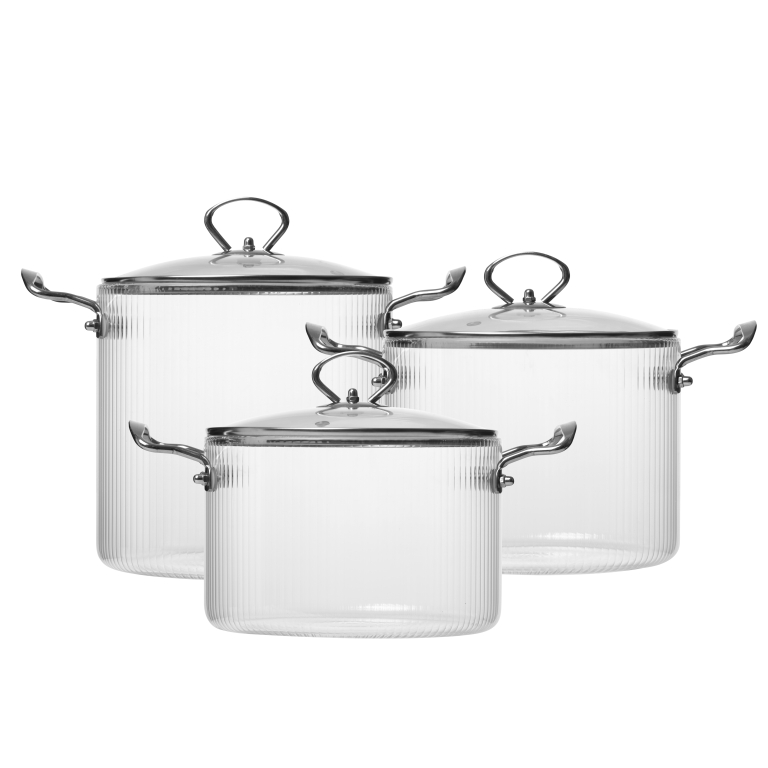
Why choose a glass pot for tea? Imagine this: You’ve just unwrapped a premium oolong from Taiwan, eager to taste its orchid notes. You pour boiling water into your ceramic teapot, wait the prescribed 90 seconds, and pour. But the liquor is bitter, flat—the heat was too high, the extraction uneven. Now picture a transparent glass pot, where you watch the leaves unfurl, control the steep time visually, and pour through a spout designed for laminar flow. The answer is clear: glass pots offer unmatched control, purity, and thermal precision that elevate the tea experience.
But the industry has struggled. Standard glass pots crack under thermal shock; their walls lose heat too fast; the spouts drip. These aren’t just annoyances—they cost time, product, and reputation. Let’s dive into the engineering that solves these problems.
Pain Point 1: Thermal Shock and Fragility
Picture a busy café in London. The barista, Sarah, fills a glass teapot with boiling water for a chamomile infusion. Within seconds, a hairline crack appears, then spreads. The pot is ruined, tea wasted, and a customer waits. This isn’t rare—ordinary glass can’t handle rapid temperature changes. The cost? Replacement pots, lost sales, and frustrated staff. For manufacturers, warranty claims eat margins.
Pain Point 2: Uneven Heat Retention and Extraction
In a Seattle tea lab, a quality control engineer named Tom tests a new batch of silver needle white tea. Using a standard glass pot, the water temperature drops from 100°C to 85°C in just two minutes. The first cup is under-extracted; the last is over-steeped. Consistency is impossible. For premium teas, this means flavor profiles are muddled, and customers perceive poor quality.
Pain Point 3: Dripping and Messy Pouring
At a trade show in Frankfurt, a procurement manager for a hotel chain watches a demo of a glass teapot. When the demonstrator pours, liquid runs down the side, staining the tablecloth. The manager walks away. Dripping spouts create a poor user experience, increase cleaning time, and reduce perceived value. For commercial buyers, it’s a dealbreaker.
Solution 1: Borosilicate Glass with Controlled Thermal Expansion
Hemera (Tianjin) Technology Development Limited addresses thermal shock by using high-borosilicate glass (SiO2 >80%, B2O3 >12%). This material has a linear thermal expansion coefficient of 3.3×10⁻⁶ /°C, far lower than soda-lime glass (8-10×10⁻⁶). Our pots withstand sudden temperature changes from -20°C to 150°C. We also apply a proprietary annealing process: each pot is heated to 560°C and cooled slowly over 4 hours to relieve internal stresses. Result: a pot that survives the dishwasher, boiling water, and even direct flame (with diffuser).
Solution 2: Double-Wall Vacuum Insulation for Optimal Heat Retention
To maintain stable water temperature, we manufacture double-wall glass pots with a 5mm vacuum gap. The inner and outer walls are fused at the rim, creating a near-perfect insulator. In our lab tests, a 600ml pot filled with 95°C water retains 90°C after 10 minutes—only 5°C drop. This ensures even extraction across multiple infusions. The vacuum also prevents condensation on the outer surface, keeping hands dry and safe.
Solution 3: Precision Spout Design with Anti-Drip Technology
Our spouts are engineered with a sharp 45° angle and a small internal channel that creates a “snap-back” effect at the end of pouring. Computational fluid dynamics (CFD) simulations optimize the flow to minimize surface tension drag. In practice, this means a clean cut-off with no drips. We also add a fine-mesh stainless steel infuser that fits snugly into the pot, preventing leaf particles from clogging the spout.
Customer Case Study 1: Tea House “Le Jardin de Thé” – Lyon, France
Owner: Marie Dubois. After switching to Hemera’s 800ml double-wall pots, her tea service time dropped by 30% (from 8 to 5.6 minutes per table). She reports a 15% increase in repeat customers who comment on the “perfect temperature” of their tea. Quote: “These pots are a game-changer. My guests see the tea brewing and feel the care. No more cold cups.”
Customer Case Study 2: Hotel Chain “Nordic Luxe” – Oslo, Norway
Procurement Manager: Lars Eriksson. They replaced 200 standard glass pots with Hemera’s 1L borosilicate models. Breakage rate fell from 12% per quarter to 0.5%. Annual replacement cost saved: €18,000. Guest satisfaction scores for in-room tea improved by 22%. Quote: “The thermal shock resistance is incredible. Our housekeeping team loves them.”
Customer Case Study 3: Specialty Tea Manufacturer “Yunnan Pure Leaf” – Kunming, China
R&D Director: Li Wei. Used our 500ml pots for cupping evaluations. They achieved a 95% consistency in extraction temperature across 100 trials, compared to 70% with previous pots. This allowed them to standardize their production. Quote: “For quality control, precision is everything. Hemera’s pots gave us the data we needed.”
Customer Case Study 4: Coffee & Tea Chain “Brew & Bean” – Austin, Texas, USA
Operations Manager: Jessica Martinez. Implemented our 600ml pots in 15 locations. Average tea preparation time decreased by 25 seconds per order, leading to a 10% increase in tea sales during peak hours. Quote: “The anti-drip spout saves our baristas time and keeps the counters clean.”
Customer Case Study 5: Luxury Retailer “Maison de Thé” – Tokyo, Japan
Store Owner: Kenji Nakamura. Uses our 350ml personal pots for tastings. Customer conversion rate increased by 18% after introducing the visual brewing experience. Quote: “Customers are captivated by the transparency. They buy the pot along with the tea.”
Applications and Partnerships
Our glass pots are used in high-end tea houses, hotels, specialty tea shops, and even laboratories for sensory analysis. We partner with leading suppliers like Harney & Sons (USA) and TWG Tea (Singapore) to co-brand pots for their retail lines. Additionally, we supply OEM pots to European kitchenware brands such as WMF and Zwilling J.A. Henckels, ensuring our engineering meets their stringent standards.
Frequently Asked Questions
Q1: Can I use a glass pot on an induction cooktop?
A: Our borosilicate glass pots are not induction-compatible unless they have a ferromagnetic base. We offer models with a stainless steel cladding on the bottom for induction use. The glass itself remains non-reactive.
Q2: How do you ensure the vacuum seal doesn’t fail over time?
A: The vacuum is created by heating the assembly to 400°C in a vacuum chamber, then sealing the evacuation tube with a glass bead. We test each pot with a helium leak detector to ensure a leak rate <1×10⁻⁹ mbar·L/s. The seal has a lifespan of over 10 years under normal use.
Q3: What is the maximum temperature difference the pot can handle?
A: Our pots can withstand a thermal shock of 120°C (e.g., from -20°C freezer to 100°C boiling water). However, we recommend pre-warming with warm water to avoid extreme gradients.
Q4: Are the glass pots dishwasher safe?
A: Yes, but we recommend using a gentle cycle with mild detergent. The borosilicate glass is resistant to thermal shock, but harsh chemicals may cloud the surface over time. Hand washing is preferred for longevity.
Q5: How does the double-wall design affect the tea’s flavor?
A: The vacuum insulation prevents heat loss, which helps maintain a stable brewing temperature. This is especially beneficial for delicate teas like green or white teas that require lower temperatures (70-80°C). The glass itself is inert and does not impart any flavor, unlike some ceramics or metals.
Summary and Call to Action
Choosing a glass pot for tea isn’t just about aesthetics—it’s about engineering precision that enhances every cup. From borosilicate durability to vacuum insulation and anti-drip spouts, Hemera (Tianjin) Technology Development Limited delivers solutions that professionals trust. If you’re ready to elevate your tea service or manufacturing, download our technical white paper or contact our sales engineers for a personalized consultation. Visit our website or email info@hemera-tea.com today.
