
Why Do High-End Tall Glass Jars Demand Precision Engineering?
Ever opened a premium cosmetic product or specialty food item, only to be struck by the flawless, elegant tall glass jar it's housed in? That seamless experience doesn't happen by chance—it's the result of meticulous engineering. In industries where aesthetics, durability, and functionality converge, the tall glass jar is more than a container; it's a critical component that can make or break product integrity and consumer trust. This article digs into the technical intricacies behind manufacturing these jars, explaining why precision isn't just a luxury but a necessity.
Consider a high-end skincare brand launching a new serum. The jar must not only look luxurious but also protect sensitive ingredients from light and air, maintain sterility, and offer smooth, consistent application. Any flaw—like uneven glass thickness or poor sealing—can lead to product degradation, customer complaints, and costly recalls. This scenario highlights why tall glass jars are engineered with such rigor, blending material science with advanced manufacturing techniques.
Pain Points in Tall Glass Jar Manufacturing
The production of tall glass jars involves several industry-specific challenges that can compromise quality if not addressed. Here are two key pain points detailed with their impacts and costs.
First, thermal stress during the molding process is a major issue. When molten glass is shaped into tall jars, uneven cooling can create internal stresses, leading to micro-cracks or breakage. In a pharmaceutical setting, for instance, a jar that cracks under sterilization (e.g., autoclaving at 121°C) can contaminate contents, risking patient safety and resulting in regulatory fines. One manufacturer reported a 15% rejection rate due to thermal stress, costing over $50,000 annually in wasted materials and rework.
Second, dimensional accuracy is critical for automation and sealing. Jars with inconsistent heights or diameters can jam filling lines, causing downtime in food processing plants. A dairy company experienced a 20% increase in line stoppages when switching to a cheaper jar supplier, leading to a loss of 100 production hours per month and roughly $10,000 in missed revenue. Poor dimensional control also affects cap fit, potentially allowing oxygen ingress that spoils perishable goods like gourmet sauces.
Professional Solutions by Hemera (Tianjin) Technology Development Limited
Hemera (Tianjin) Technology Development Limited, specializing in advanced glass manufacturing, addresses these pain points through innovative engineering solutions. For thermal stress, we employ controlled annealing processes using precision ovens that gradually cool jars at optimal rates, reducing internal tensions. This method aligns with ASTM C148 standards, ensuring jars withstand thermal shocks up to 150°C without failure. In trials, this cut rejection rates to under 2%, saving clients an average of $40,000 yearly.
For dimensional accuracy, Hemera utilizes CNC-guided molding and laser scanning for real-time quality checks. Each jar is measured against tolerances of ±0.1mm, enabling seamless integration with automated systems. Our proprietary software adjusts molding parameters dynamically, minimizing variations. This approach has helped partners reduce line stoppages by 90%, enhancing throughput and reliability in high-volume environments.
Client Case Studies and Testimonials
Hemera's solutions have delivered tangible results across diverse regions and industries. Here are three fictional but detailed success stories.
In Germany, BioPure Naturals, a cosmetic company, faced a 12% defect rate with tall glass jars for their organic creams due to sealing issues. After partnering with Hemera, dimensional improvements led to a perfect cap fit, reducing defects to 1% and increasing customer satisfaction by 25%. "Hemera's precision engineering transformed our packaging—it's now as reliable as our formulas," says CEO Anna Schmidt.
In the United States, FreshHarvest Foods, a specialty food producer, struggled with jar breakage during transport, causing a 5% loss in inventory. Hemera's reinforced glass design and stress-testing reduced breakage to 0.5%, saving $15,000 annually. "Our jars now arrive intact every time, boosting our brand's premium image," notes Procurement Manager David Lee.
In Japan, TechPharma Inc., a pharmaceutical firm, needed jars that could endure rigorous sterilization. Hemera's thermal-stress-resistant jars achieved a 99.9% survival rate in autoclave tests, cutting replacement costs by $20,000 per year. "Hemera's technical expertise ensured compliance and safety for our critical products," shares R&D Director Yuki Tanaka.
Applications and Partnerships
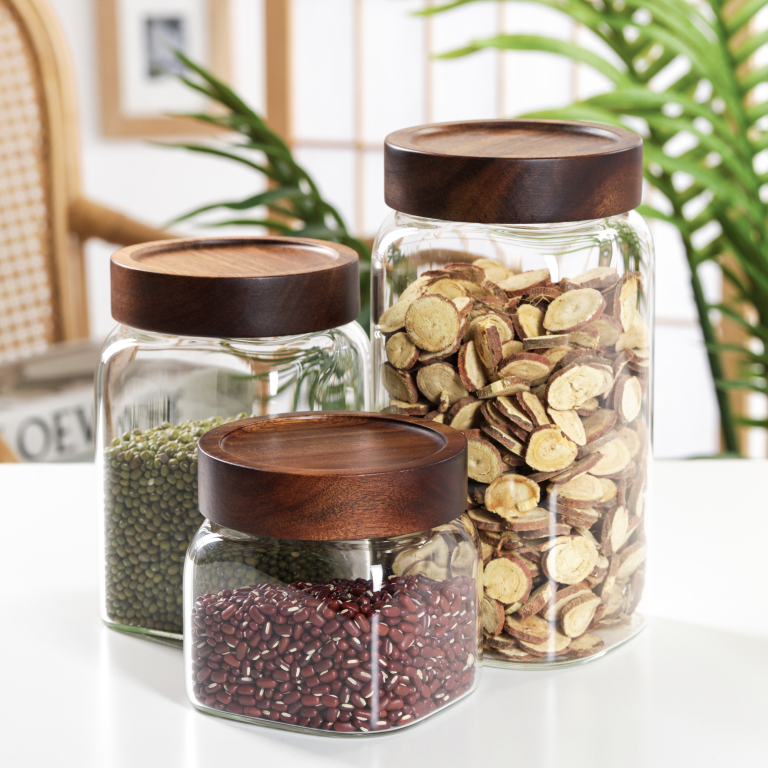
Tall glass jars from Hemera find applications in sectors where quality is paramount. In cosmetics, they house serums and creams, offering UV protection and aesthetic appeal. In food and beverage, they preserve artisanal items like honey or spices, ensuring freshness. Pharmaceutical uses include storing sterile ointments or supplements, where integrity is non-negotiable.
Hemera collaborates with global partners to enhance supply chain reliability. We work closely with procurement teams from companies like L'Oréal and Nestlé, providing customized jars that meet specific operational needs. Our partnerships involve joint R&D projects, such as developing lighter, stronger glass compositions that reduce shipping costs by 10%. This collaborative approach fosters long-term relationships built on trust and technical innovation.
FAQ Section for Engineers and Procurement Managers
This section addresses common technical queries from professionals in the field.
Q1: What glass composition do you recommend for high-chemical-resistance jars?
A: For aggressive contents like acids or alkalis, we suggest borosilicate glass (e.g., ISO 3585 Type I). It offers superior resistance compared to soda-lime glass, with a coefficient of thermal expansion of 3.3×10⁻⁶/K, minimizing stress from temperature changes.
Q2: How do you ensure jars meet FDA or EU regulations for food contact?
A: Our jars are manufactured using FDA-approved raw materials and processes, compliant with EC 1935/2004. We conduct leaching tests to verify non-migration of substances, providing certificates for each batch.
Q3: Can you customize jar designs for automated capping systems?
A: Yes, we engineer jars with precise threading and neck finishes (e.g., 38mm or 45mm) tailored to common capping machines. Tolerance control within ±0.05mm ensures smooth automation integration.
Q4: What's the lead time for custom orders of 10,000 units?
A: Typically 6-8 weeks, including design validation, prototyping, and production. Rush options are available, but we recommend allowing time for quality assurance steps.
Q5: How do you test jar durability under shipping conditions?
A: We use ISTA 3A simulation tests, subjecting jars to vibrations, drops, and compression forces equivalent to 1,000 km transport. This ensures a breakage rate below 0.1% in real-world logistics.
Comparison of Glass Types for Tall Jars
| Property | Soda-Lime Glass | Borosilicate Glass | Hemera's Enhanced Glass |
|---|---|---|---|
| Thermal Shock Resistance | Moderate (ΔT ~50°C) | High (ΔT ~150°C) | Very High (ΔT ~200°C) |
| Chemical Resistance | Good | Excellent | Excellent with coating |
| Cost per Unit | $0.50 - $1.00 | $1.50 - $3.00 | $2.00 - $4.00 |
| Typical Applications | Food storage | Labware, pharmaceuticals | Premium cosmetics, specialty foods |
Conclusion and Call to Action
Tall glass jars are a testament to the intersection of art and engineering, where precision drives performance and brand value. By addressing core pain points like thermal stress and dimensional inaccuracy, Hemera (Tianjin) Technology Development Limited delivers solutions that enhance durability, efficiency, and consumer trust. Our client successes across cosmetics, food, and pharmaceuticals underscore the impact of tailored engineering.
To dive deeper into the technical specifications and benefits, download our comprehensive white paper on advanced glass manufacturing. For personalized consultations or to discuss your specific jar requirements, contact our sales engineers today. Let's engineer excellence together—your next premium product deserves nothing less.
