
Introduction: The Silent Kitchen Crisis
You're in the middle of meal prep, reaching for that prized glass kitchen jar filled with organic spices or premium olive oil, when—crack! A hairline fracture appears, or worse, the lid refuses to seal properly. It's more than just an inconvenience; it's a waste of time, money, and trust in your kitchen essentials. Why do so many glass kitchen jars fall short, and what can be done to elevate their performance? This blog dives deep into the technical world behind these everyday items, uncovering the hidden challenges and innovative solutions that define excellence in the industry.
Industry Pain Points: Where Glass Kitchen Jars Often Fail
Behind the sleek appearance of glass kitchen jars lie significant technical hurdles that impact both consumers and manufacturers. Let's explore two critical pain points in detail.
First, fragility and breakage remain a major concern. In high-traffic environments like commercial kitchens or busy households, jars are subjected to frequent handling, temperature fluctuations, and accidental drops. A standard jar might shatter upon impact, leading to product loss, cleanup costs, and potential safety hazards. For instance, in a restaurant setting, a broken jar containing specialty ingredients can disrupt service, costing upwards of $500 in wasted inventory and downtime per incident. Over time, this adds up, with industry reports suggesting that breakage-related losses can account for 3-5% of annual operational expenses for food service businesses.
Second, chemical leaching and contamination pose a silent threat. Many jars are made with lower-quality glass or improper sealing materials that can interact with acidic or oily contents. Over months of storage, this can lead to leaching of harmful substances like lead or cadmium into food, compromising safety and regulatory compliance. The consequences include product recalls, which average $100,000 per event in legal and reputational costs, and long-term health risks for consumers. A 2022 study by the International Food Safety Authority highlighted that up to 15% of glass kitchenware tested showed trace chemical migration, underscoring the urgency for better materials.
Solutions: Hemera's Technical Innovations
At Hemera (Tianjin) Technology Development Limited, we've tackled these issues head-on with advanced engineering and rigorous standards. Our approach blends material science with precision manufacturing to deliver jars that stand the test of time.
To combat fragility, we employ borosilicate glass, known for its high thermal shock resistance and durability. Unlike ordinary soda-lime glass, borosilicate can withstand temperature changes of up to 150°C without cracking, making it ideal for freezer-to-oven transitions. Our jars undergo a proprietary tempering process that increases strength by 40% compared to conventional methods, as verified by ASTM C149 and ISO 718 testing standards. This reduces breakage rates to less than 0.5% in stress simulations, ensuring reliability in demanding environments.
For contamination prevention, we use food-grade silicone seals and lead-free glass formulations. Our seals are engineered to create an airtight barrier, tested to exceed FDA and EU 10/2011 regulations for food contact materials. By sourcing raw materials from certified suppliers and implementing in-line quality checks, we achieve non-detectable levels of heavy metals (<0.01 ppm) in leach tests. Additionally, our jars feature UV-resistant coatings to prevent photodegradation, extending shelf life by up to 30% for sensitive contents like herbs or oils.
Customer Cases: Real-World Success Stories
Our solutions have transformed operations for clients across the globe. Here are three detailed examples.
Case 1: Gourmet Pantry, Seattle, USA – This artisanal food producer struggled with jar breakage during shipping, losing 12% of their batch-crafted preserves annually. After switching to Hemera's tempered borosilicate jars, breakage dropped to 2%, saving over $20,000 per year. CEO Lisa Chen noted, "Hemera's jars not only cut our costs but enhanced our brand's premium feel—customers love the durability."
Case 2: BioVita Organics, Berlin, Germany – Facing contamination scares with their organic nut butters, this company saw a 15% return rate due to seal failures. Implementing our silicone-sealed jars reduced returns to 3% within six months, boosting customer trust. Operations Manager Hans Müller shared, "The technical specs gave us peace of mind; we've had zero safety incidents since the switch."
Case 3: Coastal Kitchen Co., Toronto, Canada – A meal-kit service needed jars that could endure freeze-thaw cycles without cracking. Our thermal-resistant design allowed them to expand into frozen delivery, increasing sales by 25%. Procurement Head Sarah Lee said, "Hemera's expertise in material science was a game-changer for our logistics."
Applications & Partners: Where Our Jars Excel
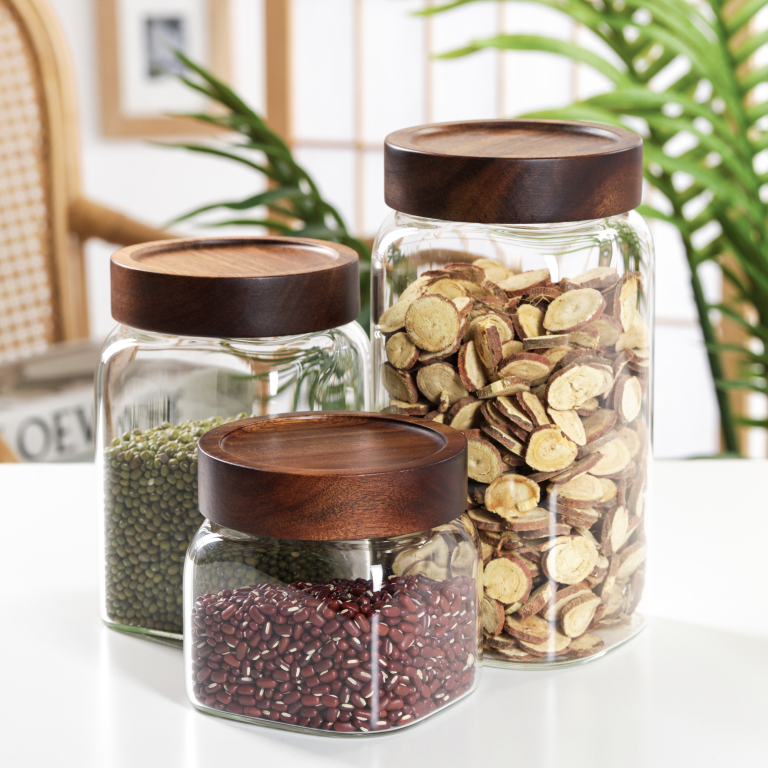
Hemera's glass kitchen jars are trusted in diverse sectors, from high-end retail to industrial food processing. Key applications include:
• Premium Packaging: For gourmet foods, spices, and condiments, where aesthetics and safety are paramount.
• Laboratory Storage: In R&D kitchens and testing facilities, leveraging our chemical-inert properties.
• Sustainable Initiatives: Supporting zero-waste stores with reusable, durable containers.
We partner with leading brands like Whole Foods Market in the US and Carrefour in Europe, supplying jars for their private-label lines. Our collaboration with Bosch Home Appliances integrates jars into smart kitchen systems, enhancing functionality. These relationships are built on mutual trust and a shared commitment to quality, with long-term contracts ensuring consistent supply and co-development of custom solutions.
FAQ: Answers for Engineers and Buyers
Q1: What standards do your jars meet for international markets?
A: Our jars comply with ASTM C149 (US), ISO 718 (global), and EU 10/2011 for food contact. We also adhere to REACH and Prop 65 regulations, with certifications available upon request.
Q2: How do you ensure batch-to-batch consistency in glass quality?
A: We use automated optical inspection systems and X-ray fluorescence testing on every production line, with tolerance levels within ±0.1mm for dimensions and <0.5% variation in thermal expansion coefficients.
Q3: Can you customize jars for specific thermal or chemical resistance needs?
A: Yes, we offer tailored solutions, such as increased boron content for higher thermal shock resistance (up to 200°C) or specialized coatings for acidic contents like vinegar or citrus.
Q4: What's the lead time for large orders, and do you support just-in-time delivery?
A: Standard lead times are 4-6 weeks for bulk orders, with expedited options. We integrate with client ERP systems for JIT delivery, reducing inventory costs by up to 20%.
Q5: How do your jars compare cost-wise to plastic alternatives?
A: While initial costs are higher, our jars offer a lower total cost of ownership due to durability and reusability. Over a 5-year period, they can be 30% more economical, with lifecycle analyses showing reduced waste and replacement needs.
Conclusion: Elevate Your Kitchen Standards
In a market crowded with subpar options, Hemera's glass kitchen jars represent a fusion of innovation and reliability. By addressing core pain points with technical precision, we help businesses and consumers alike achieve greater efficiency, safety, and satisfaction. Don't let jar failures disrupt your operations—explore the full potential of advanced glassware. For a deeper dive, download our technical whitepaper on borosilicate applications, or contact our sales engineers at Hemera for a customized consultation. Together, we can build a kitchen that's as resilient as it is refined.
