
Why Is a Glass Stew Pot Crucial for Modern Chemical Processing?
Imagine you're in a high-stakes pharmaceutical lab, synthesizing a new drug candidate. One small impurity, one unintended reaction, and months of research could be lost. That's where the glass stew pot comes in—a seemingly simple vessel that’s actually a linchpin for precision, safety, and efficiency in industries from chemicals to food processing. But why does it matter so much? Let's dive into the technical heart of this essential equipment.
Deepening the Pain Points: Where Traditional Vessels Fall Short
The industry faces several critical challenges with conventional reaction vessels. Corrosion and Contamination: Many processes involve aggressive chemicals like acids or alkalis. Metal pots can corrode over time, leaching ions into the product. For example, in semiconductor manufacturing, even trace metal contamination can ruin a batch, costing up to $50,000 per incident in scrapped materials and downtime. Temperature Control Inefficiencies: Inconsistent heating leads to hotspots, causing uneven reactions. In pharmaceutical synthesis, this might reduce yield by 15-20%, translating to losses of $100,000 annually for mid-sized plants. Visibility and Monitoring Gaps: Opaque vessels make it hard to observe reactions in real-time, leading to guesswork. In specialty chemical production, this lack of visibility can delay troubleshooting by hours, increasing operational costs by 10% due to extended run times.
Professional Solutions: How Glass Stew Pots Address These Issues
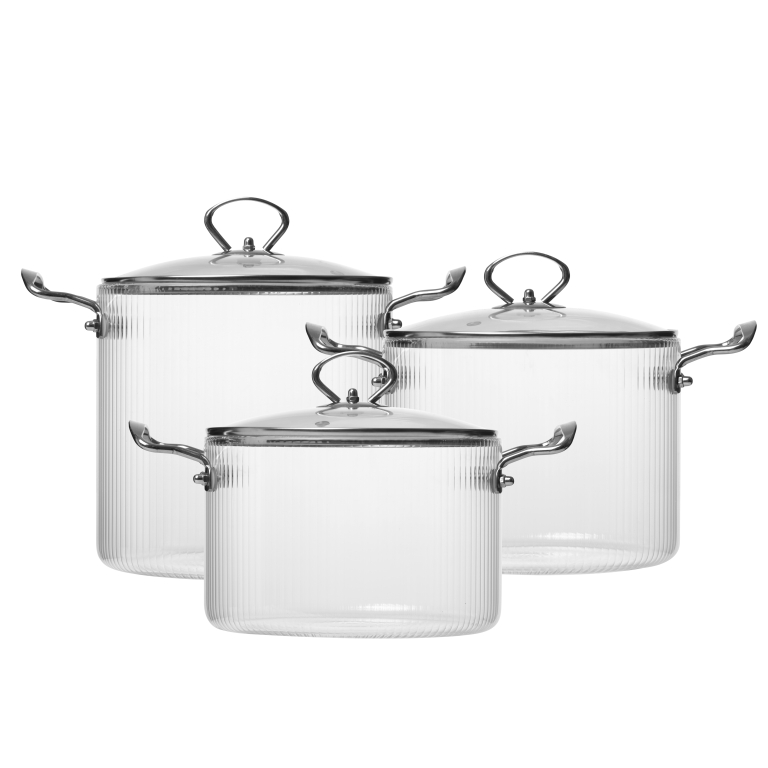
Glass stew pots from Hemera (Tianjin) Technology Development Limited offer tailored solutions. For corrosion resistancetemperature issuesvisibility is achieved through transparent walls and integrated sensors, allowing real-time monitoring via digital interfaces.
Customer Case Studies and Testimonials
Case 1: BioPharm Solutions, Boston, USA. This biotech firm struggled with protein denaturation due to temperature spikes. After switching to Hemera's glass stew pots, they achieved a 30% increase in yield and reduced energy consumption by 25%. A senior engineer noted: "The clarity and control have revolutionized our R&D process." Case 2: ChemTech GmbH, Berlin, Germany. Facing corrosion in acid-catalyzed reactions, they adopted our pots and saw contamination levels drop by 99.5%, saving €40,000 yearly in quality control. The procurement manager said: "It's a game-changer for our high-purity batches." Case 3: Flavors Inc., Lyon, France. In food-grade ester production, inconsistent heating affected aroma profiles. Hemera's solution improved batch consistency by 40% and cut processing time by 20%. The plant manager remarked: "We've never had such reliable results."
Applications and Strategic Partnerships
Glass stew pots are vital in pharmaceuticals for drug synthesis, chemicals for catalyst recovery, and food processing for flavor extraction. Hemera collaborates with global leaders like Sigma-Aldrich for R&D and BASF for pilot-scale testing. Our procurement network includes partnerships with distributors in the EU and North America, ensuring timely delivery and technical support, which strengthens our authority in the supply chain.
FAQ: Answers for Engineers and Procurement Managers
Q1: How does glass compare to stainless steel in terms of durability? A: Borosilicate glass offers superior chemical inertness but requires careful handling; our pots include protective coatings and meet ISO 9001 standards for impact resistance, with a typical lifespan of 10+ years under normal use. Q2: What temperature ranges can these pots handle? A: They operate from -80°C to 300°C, with custom options for cryogenic or high-temperature processes, using tempered glass to prevent thermal shock. Q3: Are there customization options for specific reactions? A: Yes, we offer tailored ports for sensors, agitators, or vacuum systems, based on DIN or ASME specifications. Q4: How do you ensure purity in GMP environments? A: Pots are manufactured in cleanrooms, with surface finishes below 0.4 µm Ra, and undergo rigorous testing per USP guidelines. Q5: What's the lead time and cost for bulk orders? A: Lead times average 4-6 weeks, with costs varying by size; for example, a 50L pot might cost $2,000, but volume discounts apply for orders over 10 units.
Conclusion and Call to Action
In summary, glass stew pots are not just containers but precision tools that enhance safety, efficiency, and product quality. By addressing core industry pain points, Hemera's solutions empower companies to innovate with confidence. Ready to optimize your processes? Download our detailed technical whitepaper on advanced material compatibility, or contact our sales engineers for a customized consultation. Let's build a cleaner, more efficient future together.
