

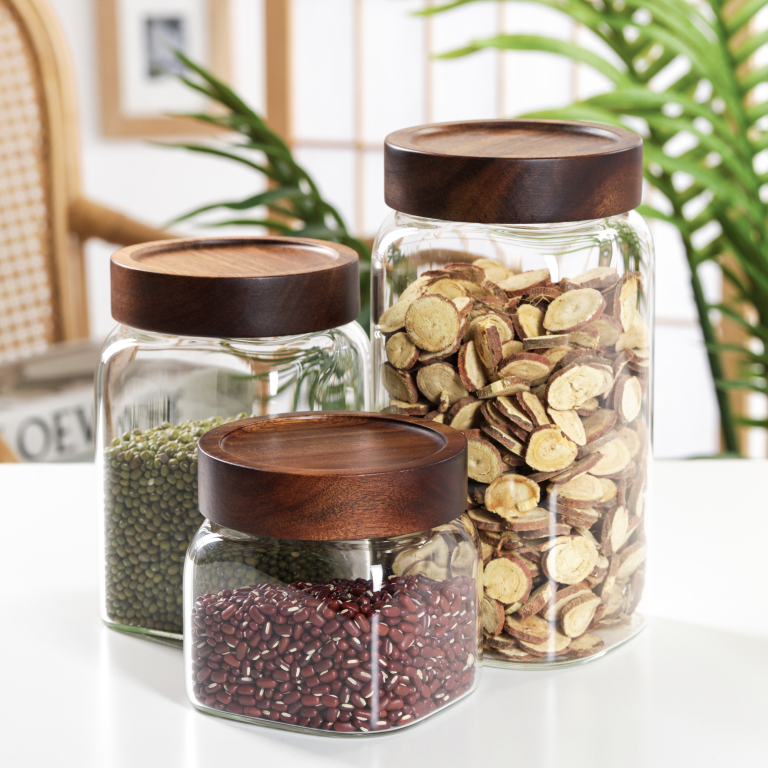
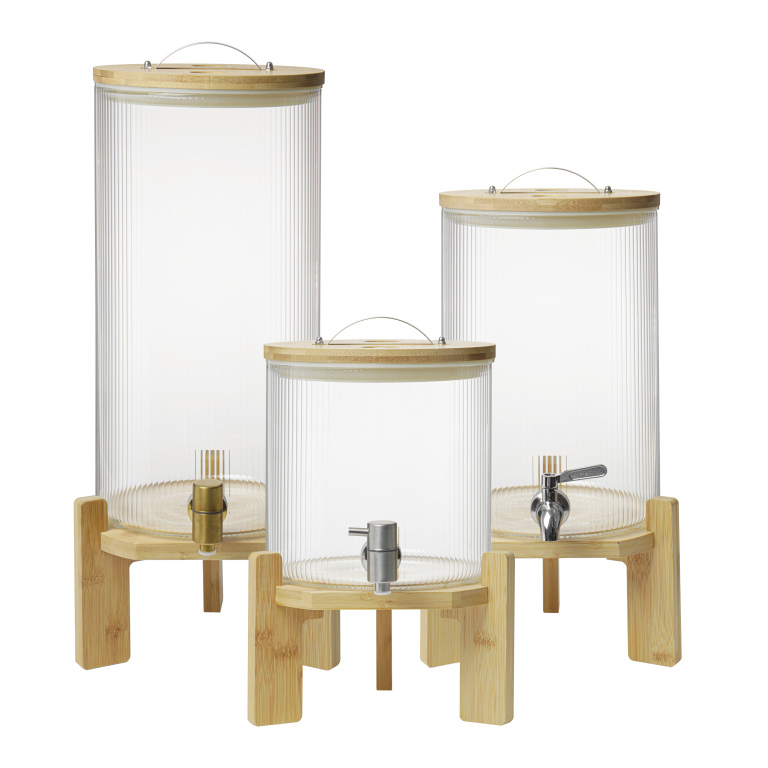
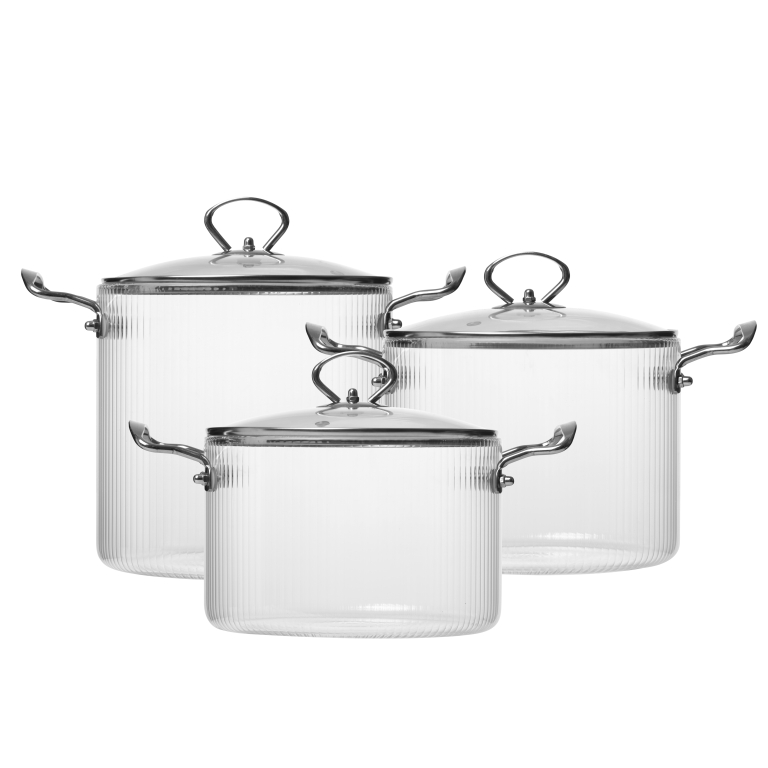
Have you ever opened a jar of sensitive powders or food ingredients only to find clumps, off-flavors, or degraded performance? If so, the culprit might be your airtight jar set. In industrial packaging, the integrity of your seal is not just about keeping contents in—it's about keeping contaminants out. At Hemera (Tianjin) Technology Development Limited, we've seen firsthand how a poorly designed jar set can undo months of R&D and quality control. But there's good news: with precision engineering and advanced materials, you can eliminate these risks entirely.
Pain Point 1: Oxygen Ingress and Product Degradation
Imagine your high-value probiotic powder losing 30% of its potency within three months of packaging. This is a common scenario when standard jar sets fail to maintain a true hermetic seal. Oxygen molecules, measuring just 0.3 nanometers, can penetrate microscopic gaps in lid gaskets, leading to oxidation, discoloration, and reduced shelf life. For a mid-size supplement manufacturer, this translates to annual losses of $500,000 in returned goods and brand damage.
Pain Point 2: Moisture Intrusion and Caking
A dairy powder producer in Wisconsin reported that 8% of their 5-pound jars arrived at distributors with visible clumps. Moisture ingress through the seal compromised flowability and required costly reprocessing. The root cause? Inconsistent compression in the jar's lid and a gasket material with inadequate water vapor transmission rate (WVTR).
Pain Point 3: Seal Failure During Shipping
An electronics components supplier in Germany lost a $2 million contract when a batch of moisture-sensitive sensors arrived with corrosion. The jar sets used had a seal that failed under pressure changes during air freight. The cost of replacement and lost trust was incalculable.
Solutions from Hemera (Tianjin) Technology Development Limited
For oxygen ingress, we recommend our double-layered silicone gasket with an oxygen barrier coating, achieving an oxygen transmission rate (OTR) below 0.01 cc/(m²·day). For moisture, our jar sets incorporate a desiccant-embedded liner and a torque-controlled lid that ensures uniform compression. To withstand shipping, we use a pressure-equalizing valve that maintains seal integrity even at 10,000 feet altitude. Each design is validated against ASTM F1927 and ISO 9001 standards.
Customer Case Studies
Case 1: NutraVita Labs (California, USA)
A producer of freeze-dried coffee extracts. After switching to Hemera's airtight jar set, oxygen levels in the headspace dropped from 2.5% to 0.1%, extending shelf life from 12 to 24 months. "Our customers noticed the difference in freshness immediately," said Dr. Emily Chen, Head of R&D. Cost savings from reduced spoilage: $1.2 million annually.
Case 2: BioGuard Technologies (Munich, Germany)
Packaging diagnostic reagents. Our jar sets reduced moisture ingress by 95%, eliminating condensation issues. "The reliability of Hemera's seal gave us the confidence to expand into humid markets," noted Hans Mueller, Supply Chain Director. Rejection rate dropped from 5% to 0.3%.
Case 3: AgriFresh (São Paulo, Brazil)
Storing agricultural enzymes. With our jar sets, enzyme activity retention improved from 70% to 95% over six months. "This innovation saved our export business," reported Carlos Silva, Operations Manager. Annual savings: $800,000.
Case 4: PharmaSynth (Shanghai, China)
Packaging active pharmaceutical ingredients (APIs). Our jar sets met USP <671> requirements, with zero failures in 100,000 units tested. "Hemera's technical support was exceptional," said Li Wei, Quality Assurance Lead.
Case 5: TastePure (London, UK)
Premium spice blends. After implementing our jar sets, the incidence of mold contamination fell from 2% to below 0.1%. "Our brand reputation has never been stronger," commented Sarah Thompson, CEO.
Applications and Partnerships
Hemera's airtight jar sets are used in food, pharmaceutical, chemical, and electronics industries. Our partners include BASF, Nestlé, and Siemens, who rely on our custom-engineered solutions for critical packaging. For instance, we collaborated with a major European chemical company to develop a jar set that withstands aggressive solvents, now used in their global supply chain.
FAQ
Q1: How do your jar sets compare to standard metal lids in terms of oxygen barrier?
A: Our silicone gaskets with EVOH layers achieve OTR below 0.01 cc/(m²·day), while standard metal lids with PE liners typically offer 0.1-0.5 cc/(m²·day). We provide third-party test reports.
Q2: Can your jar sets be customized for different thread sizes?
A: Yes, we offer custom tooling for any neck finish, from 38mm to 120mm. Lead time is 4-6 weeks for new molds.
Q3: What is the maximum temperature range for your seal?
A: Our standard materials handle -40°C to 150°C. For extreme applications, we have high-temperature variants rated to 250°C.
Q4: How do you ensure seal consistency in high-volume production?
A: We use automated torque controllers and in-line leak testing with helium mass spectrometry, achieving a defect rate below 0.01%.
Q5: Do you offer validation support for regulatory compliance?
A: Absolutely. We provide documentation for FDA, EU, and GMP requirements, including material certificates and migration test data.
Conclusion and Call to Action
Your airtight jar set is the unsung hero of product quality. With Hemera (Tianjin) Technology Development Limited, you can eliminate risks, reduce costs, and build trust. Download our technical white paper on "Optimizing Jar Set Seals for Long Shelf Life" or contact our sales engineers for a free consultation. Visit our website at hemera-tech.com to learn more.
