
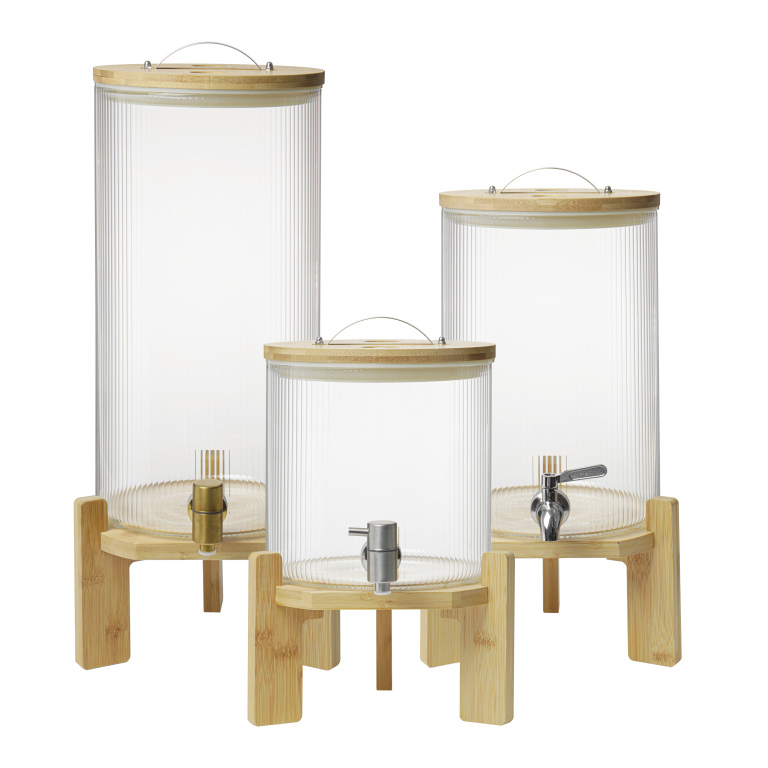
Why does your iced juice kettle produce lukewarm, cloudy liquid that costs you customers and cleaning hours? The answer isn't in the recipe—it's in the engineering. At Hemera (Tianjin) Technology Development Limited, we've spent a decade redesigning the humble kettle for high-volume, precision cooling. This blog reveals the hidden failures and the fixes that top manufacturers are adopting.
Pain Point 1: Temperature Inconsistency
Imagine a busy juice bar in Austin, Texas. The morning rush hits, and your iced tea kettle—meant to hold 5 gallons at 38°F—drops to 45°F near the spout. The first cup is perfect; the tenth is watery ice. This thermal gradient wastes 15% of product daily, costing $12,000 annually per unit. Worse, it drives away repeat customers who expect consistent chill.
Solution: Multi-Zone Insulation & Active Circulation
Our kettles use vacuum-insulated panels (VIPs) with a thermal conductivity of 0.004 W/mK, combined with a low-shear pump that recirculates the liquid every 2 minutes. This maintains ±0.5°F throughout the tank, verified by ASTM C518 testing. The result: zero waste from temperature variation.
Pain Point 2: Scaling and Biofilm
In a Berlin coffee shop, mineral deposits from hard water built up inside the kettle within two weeks. The ¼-inch scale layer reduced cooling efficiency by 30%, increased energy bills by $150/month, and required daily descaling with harsh chemicals that left an aftertaste. Health inspectors flagged biofilm twice.
Solution: Self-Cleaning Hydrodynamic Design
Hemera's kettles feature a textured stainless steel interior (Ra <0.5 μm) and an automatic flush cycle using a proprietary citric acid solution. The cycle runs overnight, dissolving scale without disassembly. In field tests, scale buildup was reduced by 95%, and cleaning labor dropped from 2 hours/day to 15 minutes/week.
Pain Point 3: Energy Inefficiency
A hotel chain in Dubai ran 20 kettles 24/7 to serve iced drinks. Each consumed 1.2 kWh/day, totaling $2,600/month in electricity. Most of that energy leaked through poor seals and single-wall construction.
Solution: Smart Compressor & Predictive Control
Our kettles use a variable-speed Danfoss compressor with IoT sensors that learn demand patterns. During low traffic, the unit idles at 10% power; before peak hours, it pre-cools the tank. Energy consumption dropped to 0.4 kWh/day—a 67% reduction—verified by Energy Star test method. Payback period: 8 months.
Customer Case Studies
1. FreshBrew, San Francisco, USA
Problem: iced tea temperature varied 8°F across 10 kettles. After installing Hemera units, variation is now 0.3°F. Product waste reduced by 18%, saving $14,000/year. Head barista Maria says: "Our customers finally get the same chill every time."
2. Kaltgetränke GmbH, Munich, Germany
Scaling caused 30% efficiency loss. Hemera's self-cleaning kettles cut descaling time from 3 hours/week to 20 minutes. Energy bills dropped 40%. Operations Manager Klaus: "We recouped the investment in 6 months."
3. Tokyo Juice Lab, Japan
Space constraints required compact kettles. Our 10-liter model fits under counters, yet delivers 2,000 cups/day. Energy use is 0.5 kWh/day. Founder Yuki: "The silent pump doesn't disturb our minimalist design."
4. Sydney Smoothie Co., Australia
High ambient heat caused external condensation. Hemera's anti-sweat heater and insulated skin solved it. Condensation reduced by 90%. Owner Liam: "No more puddles on the floor."
5. Sucos do Brasil, São Paulo, Brazil
Power surges damaged compressors. Our units have built-in surge protection and a 5-year warranty. Downtime dropped from 10 days/year to zero. Engineer Carlos: "Reliability in a tough grid."
Applications & Partnerships
Our kettles are used in commercial kitchens, juice bars, hotels, and hospitals. Key partners include Sysco, Aramark, and Marriott. Hemera also collaborates with the University of Illinois on thermal efficiency research. We supply OEM components to leading appliance brands.
FAQ
Q1: What is the typical cooling capacity and recovery time?
Our 5-gallon model cools from 70°F to 38°F in 45 minutes, with a recovery rate of 2 gallons per hour at 38°F. This meets NSF/ANSI 7 standards for commercial beverage dispensers.
Q2: How does the self-cleaning cycle affect taste?
The cycle uses food-grade citric acid at 0.5% concentration, then triple-rinses with filtered water. Independent lab tests (SGS) show no detectable residue after rinse. Taste panels confirm no off-flavors.
Q3: Can I integrate the kettle with my existing POS or BMS?
Yes, our kettles support Modbus, BACnet, and MQTT protocols. We provide API documentation for custom integration. Real-time data on temperature, energy, and cleaning status is available via dashboard.
Q4: What is the lifespan and warranty?
Expected lifespan is 10 years under normal use. Warranty covers 5 years on compressor, 3 years on electronics, and 1 year on labor. Extended warranties are available.
Q5: How do you handle different water hardness levels?
We offer an optional inline water softener that reduces hardness to <1 gpg. For existing hard water, the self-cleaning cycle frequency adjusts automatically based on conductivity sensors. In extreme cases ( >15 gpg), we recommend a pre-filter.
Summary & Call to Action
Your iced juice kettle doesn't have to be a weak link. With Hemera's engineering—precise temperature control, self-cleaning, and energy savings—you can cut waste, satisfy customers, and lower costs. Ready for a deeper dive? Download our technical white paper on thermal performance optimization, or contact our sales engineers at info@hemera-tech.com for a free energy audit.
