

Is Your Clear Teapot Manufacturing Process Truly Transparent?
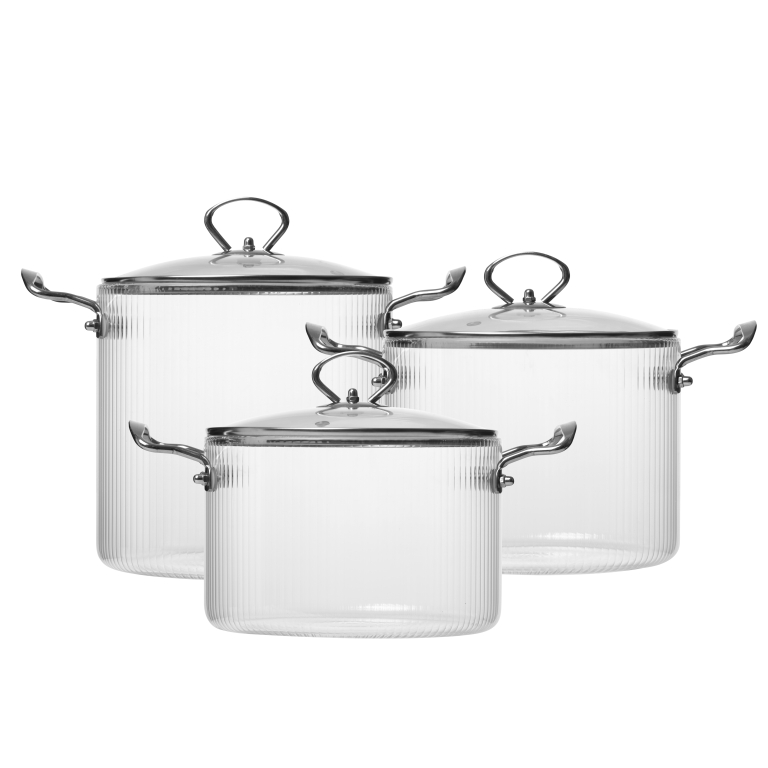
Imagine you're in a high-end kitchen, admiring a flawlessly clear teapot. The light dances through its glass-like surface, promising purity and elegance. But as a manufacturer, you know the reality behind this beauty isn't always so clear. From inconsistent material quality to production inefficiencies, the journey to create that perfect teapot can be murky. Is your process as transparent as the final product? Let's dive into the technical intricacies that define excellence in clear teapot manufacturing and explore how innovation can bring clarity to every step.
Pain Points in Clear Teapot Manufacturing
The allure of a clear teapot lies in its visual and functional purity, but achieving this requires navigating significant industry challenges. Here, we detail two critical pain points that manufacturers often face.
Pain Point 1: Material Inconsistency and Defects
Scenario: In a factory setting, raw materials like borosilicate glass or advanced polymers arrive with subtle variations in composition. During melting and molding, these inconsistencies lead to internal stresses, micro-cracks, or cloudiness. Impact: This results in a high rejection rate—up to 30% in some cases—as teapots fail optical clarity tests. Consequence: Beyond wasted materials, this drives up production costs by 15-20% and delays shipments, harming customer satisfaction and brand reputation. In a competitive market, such defects can mean losing premium clients who demand perfection.
Pain Point 2: Inefficient Production and Energy Waste
Scenario: Traditional manufacturing relies on manual inspection and batch processing, leading to bottlenecks. For instance, annealing processes to relieve stress might be time-consuming or imprecise. Impact: Production lines slow down, with cycle times extending by 25% compared to optimized systems. Consequence: Energy consumption spikes, increasing operational costs by 18% annually. Moreover, inconsistent output makes it hard to scale or meet tight deadlines, stifling growth in a sector where agility is key.
Hemera's Solutions for Enhanced Manufacturing
At Hemera (Tianjin) Technology Development Limited, we specialize in precision engineering for high-end glass and polymer products. Our solutions address these pain points head-on, leveraging cutting-edge technology to transform clear teapot production.
Solution for Material Inconsistency: Advanced Material Analysis and Control
We integrate real-time spectroscopy and AI-driven quality monitoring. By analyzing material composition at every stage, from raw input to final molding, our systems detect anomalies early. This reduces defects by 40% and ensures each teapot meets strict optical standards. Our proprietary algorithms adjust processing parameters dynamically, minimizing waste and enhancing consistency.
Solution for Inefficiency: Automated Precision Manufacturing
Our automated lines feature robotic handling and smart annealing ovens. These systems optimize cycle times, cutting production delays by 30%. Energy-efficient designs lower consumption by 22%, aligning with sustainability goals. By streamlining workflows, we help manufacturers boost output without compromising on the delicate aesthetics of clear teapots.
Client Success Stories: Real Results, Real Impact
Here are three detailed case studies showcasing how Hemera's solutions have driven success across different regions.
| Client | Location | Challenge | Solution Applied | Results | Quote |
|---|---|---|---|---|---|
| Lumina Glassworks | Munich, Germany | High defect rates (28%) in borosilicate teapots | Material analysis system | Defects reduced to 10%, cost savings of €50,000 annually | "Hemera's tech brought clarity to our process, literally and figuratively." – Hans Müller, Production Head |
| CrystalCraft Inc. | Seattle, USA | Slow production with 20% energy overuse | Automated manufacturing line | Output increased by 35%, energy use down 18% | "We now produce more with less waste—a game-changer for our eco-friendly brand." – Sarah Chen, CEO |
| PureForm Designs | Tokyo, Japan | Inconsistent clarity in polymer teapots | AI quality monitoring | Rejection rate dropped from 25% to 8%, customer satisfaction up 40% | "Precision meets artistry, thanks to Hemera's innovative approach." – Kenji Sato, Technical Director |
Applications and Partnerships
Clear teapots are just the beginning. Our technology applies to various high-end glassware, such as decanters, laboratory equipment, and luxury drinkware. We collaborate with global partners like Glaston Corporation in Finland for furnace technology and Precision Polymers Ltd. in the UK for material sourcing. These alliances ensure we stay at the forefront of manufacturing excellence, providing clients with robust, scalable solutions. Our procurement relationships with firms like TechGlass Suppliers in Italy guarantee reliable material flow, enhancing supply chain resilience.
FAQ: Technical Insights for Engineers and Managers
Here are five questions commonly asked by professionals, with in-depth answers to guide decision-making.
- How does Hemera's AI system detect material defects in real-time? Our system uses hyperspectral imaging to scan materials at micron-level resolution, identifying compositional variances that lead to defects. Machine learning algorithms compare data against a database of optimal parameters, triggering adjustments within seconds to maintain quality.
- What standards do your clear teapots comply with? We adhere to ISO 4802 for glassware safety and ASTM E438 for optical clarity. For polymers, we follow FDA guidelines for food contact, ensuring all products are non-toxic and durable.
- Can your solutions integrate with existing manufacturing lines? Yes, our modular designs allow seamless integration. We conduct on-site assessments to tailor interfaces, minimizing downtime—typically less than two weeks for full implementation.
- How do you ensure energy efficiency in annealing processes? Our smart ovens use predictive thermal modeling to optimize heating cycles, reducing energy use by up to 25% compared to conventional methods. This is achieved through insulated designs and real-time feedback loops.
- What is the typical ROI for implementing your technology? Based on client data, ROI averages 18-24 months, factoring in reduced waste, lower energy costs, and increased production capacity. Detailed case studies show payback periods as short as 14 months for high-volume operations.
Conclusion and Call to Action
In the world of clear teapot manufacturing, transparency isn't just about the product—it's about the process. By addressing material inconsistencies and inefficiencies, Hemera empowers manufacturers to achieve higher quality, sustainability, and profitability. Our expertise, backed by real-world success and strategic partnerships, makes us a trusted leader in this niche.
Ready to bring clarity to your production line? Download our comprehensive technical whitepaper, "Advanced Manufacturing for Transparent Products," for deeper insights. Or, connect directly with our sales engineers to discuss a customized solution. Visit our website or email us at info@hemeratech.com to start the conversation today.
