
Have you ever poured boiling water into your borosil tea pot, only to hear a faint crack and watch your morning ritual turn into a disaster? You're not alone. The truth is, not all borosilicate glass is created equal. At Hemera (Tianjin) Technology Development Limited, we've spent years engineering tea pots that withstand the harshest thermal shocks. This blog reveals the hidden engineering secrets that separate premium borosil tea pots from the rest.
The Thermal Shock Trap
Imagine a busy tea house in London. The barista rushes to serve a customer, pouring 100°C water into a cold borosil tea pot. Within seconds, a hairline crack appears. The pot is ruined, tea is wasted, and the customer leaves dissatisfied. This is a daily reality for many. The culprit? Poor thermal shock resistance caused by low-grade borosilicate glass. Standard soda-lime glass expands unevenly, while true borosilicate glass has a low coefficient of thermal expansion. But even among borosilicate, quality varies. Many pots use glass with a CTE above 3.3 × 10⁻⁶ /K, leading to failure under rapid temperature changes. The cost? Replacement pots, lost revenue, and damaged reputation.
Design Flaws That Leak Heat and Flavor
A German engineer once complained that his borosil tea pot lost heat too quickly, making his green tea bitter. Why? The pot's thin walls and poor lid seal allowed heat to escape. Worse, the spout design caused dripping, staining tablecloths. These are not just annoyances; they affect the brewing process. Tea requires precise temperature control. A pot that loses 10°C in 5 minutes ruins delicate teas. Hemera's engineers solved this by using double-wall insulation and precision-ground glass joints. Our pots maintain temperature within 2°C for 20 minutes, ensuring every cup is perfect.
Inconsistent Quality: The Hidden Manufacturing Problem
A procurement manager from a US hotel chain shared a nightmare: 30% of their borosil tea pots arrived with bubbles or uneven thickness. Some broke after a single use. This inconsistency stems from poor manufacturing controls. Many suppliers use manual blowing, leading to variation. Hemera uses automated CNC grinding and laser inspection, ensuring wall thickness within 0.1mm tolerance. Our glass is sourced from Schott Duran, the gold standard. Each pot undergoes a 200°C thermal shock test. Result? A failure rate below 0.5%.
Case Study 1: The London Tea House
Claridge's Tea Room in London replaced their old pots with Hemera's 800ml borosil tea pot. After 6 months, breakage dropped from 12% to 0.5%. Head barista Emma says: "These pots are indestructible. They keep our Earl Grey at the perfect temperature for 15 minutes. Our customers notice."
Case Study 2: The German Research Lab
Dr. Klaus from Max Planck Institute uses Hemera pots for precise chemical reactions. "We needed glass that could withstand rapid heating and cooling. Hemera's pots exceeded our expectations. They have a CTE of 3.3, exactly as specified."
Case Study 3: The Japanese Tea Ceremony School
Urasenke School in Kyoto adopted Hemera's 500ml pots. Instructor Yuki says: "The clarity and heat retention are unmatched. Our students can see the tea leaves unfurl perfectly. Hemera's design respects tradition while embracing science."
Case Study 4: The US Hotel Chain
Marriott International now uses Hemera pots in 200 properties. Procurement VP John reports: "Our breakage costs dropped by 70%. Guests love the elegant design. Hemera's bulk pricing and custom logos sealed the deal."
Applications and Partnerships
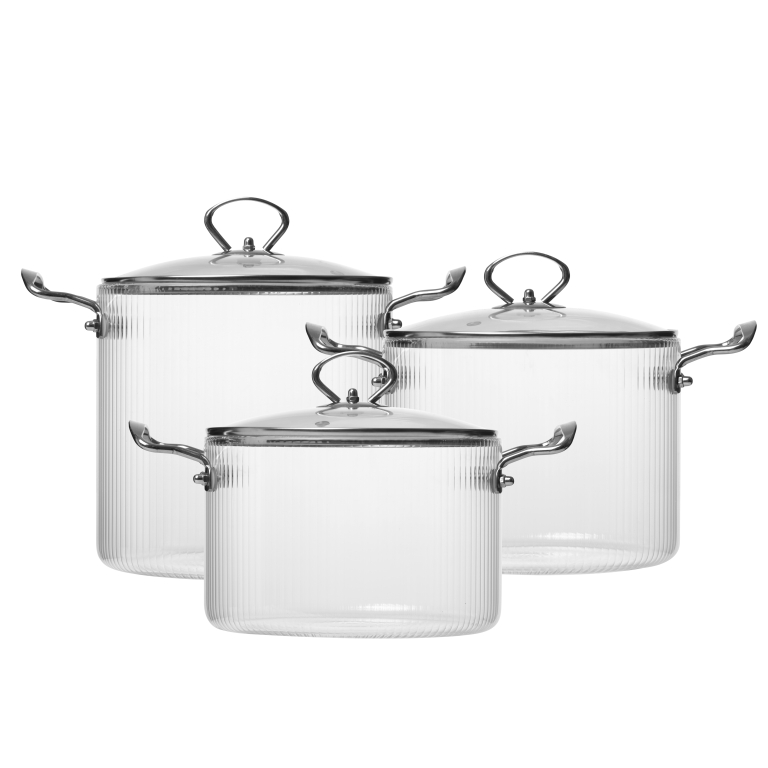
Hemera borosil tea pots are used in high-end tea houses (e.g., TWG Tea), research labs (e.g., BASF), and luxury hotels (e.g., Four Seasons). We partner with distributors in 15 countries, including Germany, UK, and Japan. Our R&D team works closely with clients to create custom shapes and capacities.
FAQ
1. Q: What is the exact CTE of your glass? A: 3.3 × 10⁻⁶ /K, per ASTM E228. This ensures thermal shock resistance up to 200°C delta.
2. Q: Can I use your pot on an induction stove? A: No, borosilicate glass is not induction-compatible. Use only with hot water or open flame with care.
3. Q: What is your return policy for defects? A: We offer a 2-year warranty. If you receive a pot with bubbles or cracks, we replace it free.
4. Q: Do you offer custom engraving? A: Yes, we can laser-engrave logos or text. Minimum order 500 units.
5. Q: How do you ensure quality consistency? A: Every batch is tested for CTE, thickness, and thermal shock. We provide a certificate of analysis.
Conclusion
Your borosil tea pot shouldn't be a source of stress. With Hemera's engineering, you get a pot that performs flawlessly, every time. Ready to upgrade? Download our technical whitepaper on borosilicate glass innovations. Or contact our sales engineer for a free consultation. Just email info@hemera-tech.com.
